
Ultrasound-Guided Dermal Fillers in Pasadena: Are They Worth It for Safer Injections?
Choosing dermal filler is not only about the product or the result; it is also about knowing the anatomy beneath the skin. For patients seeking ultrasound-guided dermal fillers in Pasadena, real-time imaging can add meaningful information to a safety-first treatment plan. Akari Medspa uses a personalized approach to help patients pursue refined lips, cheeks, under-eyes, chin, jawline, and facial balancing with greater anatomical awareness.
Quick Answer: Ultrasound-guided dermal fillers in Pasadena can be worth the additional investment for patients who prioritize anatomical precision, have previous filler, or are treating higher-risk areas. Ultrasound allows a trained injector to visualize blood vessels, tissue planes, and existing filler in real time, helping guide planning and injection decisions. It reduces uncertainty but does not eliminate all filler risks.
What are ultrasound-guided dermal fillers, and how do they improve injection planning?
Real-time imaging beneath the skin
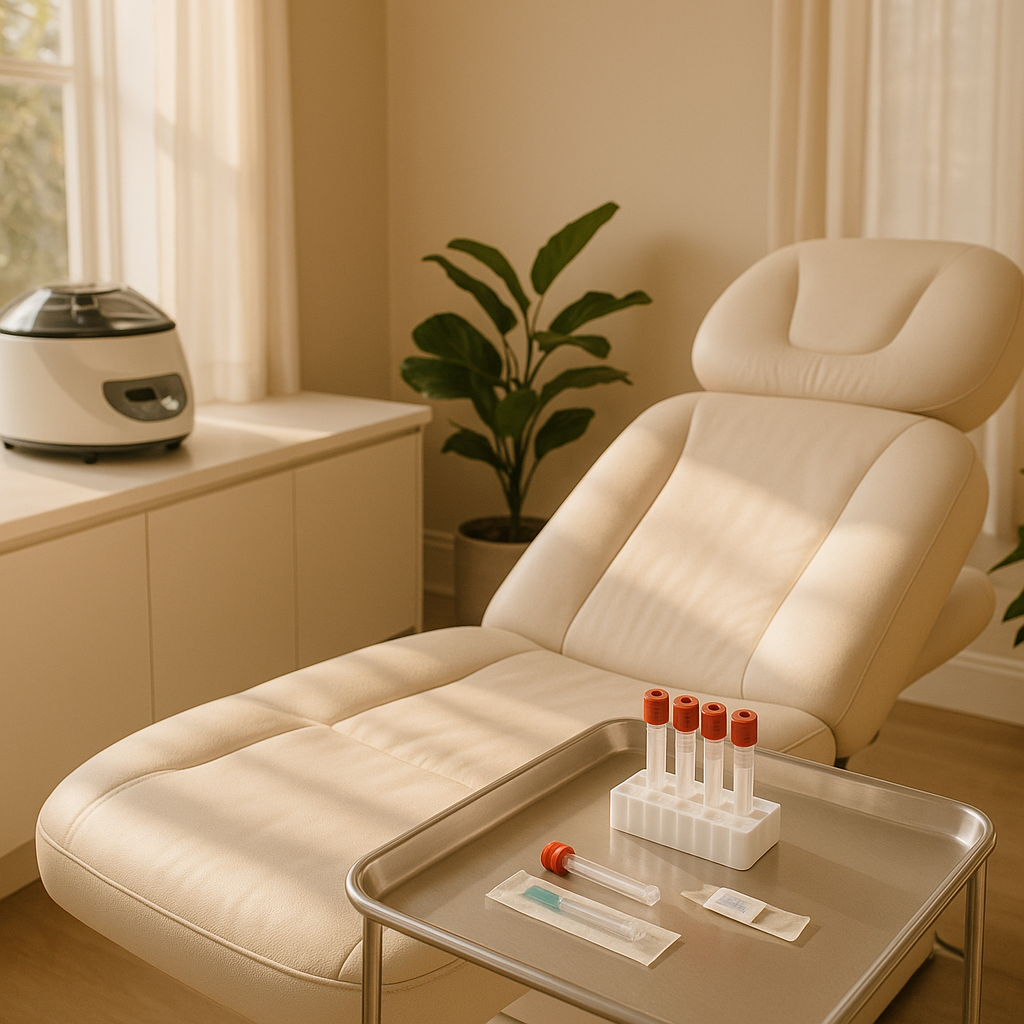
Ultrasound-guided filler treatment pairs conventional aesthetic assessment with high-frequency ultrasound imaging. The ultrasound probe sends sound waves through tissue and converts their returning echoes into a live image. Depending on the probe frequency and patient anatomy, an experienced provider may identify skin, subcutaneous fat, muscle, fascial planes, selected arteries and veins, and material consistent with prior filler.
This matters because the facial arterial system is variable. A vessel may not lie in exactly the same position or depth from one person to another, and its location can differ across facial regions. Instead of relying only on surface landmarks and textbook anatomy, the provider can use imaging as an additional source of patient-specific information.
At Akari Medspa, ultrasound may be used before injection to map relevant anatomy, during selected injections to help identify the intended plane, or after treatment to evaluate a concern such as suspected residual product. Learn more about ultrasound-guided injections in Newport Beach and Pasadena and how imaging fits into a comprehensive consultation.
What ultrasound can and cannot do
Ultrasound is an adjunct, not a guarantee. It can help a clinically trained injector make more informed decisions, but it does not make fillers risk-free, replace careful technique, or ensure a particular cosmetic outcome. Image quality depends on the device, probe, settings, facial region, patient anatomy, and the operator’s training in both ultrasound interpretation and facial injection anatomy.
Patients should be cautious of absolute promises such as “zero-risk filler.” Vascular occlusion, infection, inflammatory reactions, bruising, swelling, asymmetry, nodules, and dissatisfaction remain possible complications of hyaluronic acid (HA) fillers. The safety goal is risk reduction through appropriate patient selection, anatomy knowledge, conservative technique, emergency preparedness, and timely follow-up.
Are ultrasound-guided dermal fillers safer in Pasadena?
Why certain facial areas warrant added caution
All injectable treatments require clinical judgment, but some facial zones have a closer relationship to important blood vessels. These may include the nose, glabella or area between the brows, tear trough, temple, nasolabial fold, lips, chin, and jawline. A filler inadvertently entering or compressing a vessel can compromise blood flow. Although rare, vascular occlusion is a time-sensitive medical emergency that can lead to skin injury and, in exceptionally serious cases, visual complications.
For that reason, patients in Pasadena, San Marino, Arcadia, South Pasadena, San Gabriel, and Glendale often ask whether imaging is necessary for under-eye filler, nasal filler, or correction of work performed elsewhere. The right answer is individual: ultrasound is especially valuable when the anatomy is difficult to predict, when prior filler may be present, or when a treatment plan involves a higher-risk area. It may also be useful when dissolving or assessing previously placed HA filler.
A safer-injection protocol is bigger than one device
A responsible filler appointment should include a detailed health history, aesthetic examination, discussion of alternatives, informed consent, product traceability, and written aftercare. Patients should seek a licensed, appropriately trained medical injector and ask about their experience with facial anatomy, management of complications, and access to hyaluronidase for HA filler emergencies.
In the United States, several HA filler products, including members of the Juvéderm and Restylane families, have FDA approval for specified facial indications and age groups. Not every use or facial area is FDA-approved; treatment outside a product’s labeled indication is considered off-label and should be discussed clearly. Diagnostic ultrasound equipment is regulated as medical equipment, but its use to guide cosmetic filler is a clinical technique rather than a promise of superior outcomes in every case.
Akari Medspa approaches aesthetic care with the principle that a natural result and a careful medical process belong together. A consultation is the appropriate setting to determine whether ultrasound guidance adds meaningful value to your plan.
Who is a good candidate for ultrasound-guided dermal fillers in Pasadena?
Patients who may benefit most
Ultrasound guidance is not mandatory for every straightforward filler appointment, but it can be particularly compelling for patients who value an additional layer of individualized anatomical assessment. Good candidates commonly include:
- Patients with filler placed previously, especially when the product, amount, plane, or date is uncertain.
- Patients seeking revision, correction of asymmetry, or evaluation of persistent fullness.
- People considering treatment in higher-risk or technically complex areas, such as the nose, tear trough, temple, or lips.
- Patients pursuing comprehensive facial balancing involving the cheeks, chin, jawline, and lower face.
- Patients with a history of significant swelling, nodules, or an adverse filler experience who need a careful assessment.
- Safety-conscious first-time patients who understand that imaging is one part of—not a substitute for—expert injection practice.
For example, a patient from Pasadena preparing for a wedding, a professional commuting from Irvine, or a Newport Beach resident wanting subtle lower-face support may have different priorities. The treatment plan should reflect facial proportions, skin quality, prior procedures, downtime tolerance, and budget—not a one-size-fits-all syringe count.
Who should postpone or avoid treatment?
Filler may need to be delayed for active skin infection, an open lesion near the planned treatment site, uncontrolled inflammatory skin disease, active dental infection or planned invasive dental work near certain treatment areas, pregnancy, or breastfeeding. Patients with prior severe allergy, autoimmune disease, a history of granulomas, bleeding concerns, or current anticoagulant use should disclose this during consultation. These factors do not automatically rule out treatment, but they require individualized medical review.
Patients seeking a permanent change, surgical-level lifting, or correction of major laxity may be better served by another approach. Collagen stimulators, energy-based skin tightening, skincare, or referral to a facial plastic surgeon may be more appropriate depending on the concern.
What happens during an ultrasound-guided filler appointment at Akari Medspa?
Step 1: Consultation, goals, and facial assessment
Your provider begins by reviewing your medical history, medications, previous injectable records when available, allergies, and priorities. You will discuss which changes matter most: softened smile lines, cheek support, a sharper chin profile, lip hydration, reduced shadowing, or more balanced proportions. Photographs may be taken for treatment planning and progress comparison.
Step 2: Ultrasound mapping when indicated
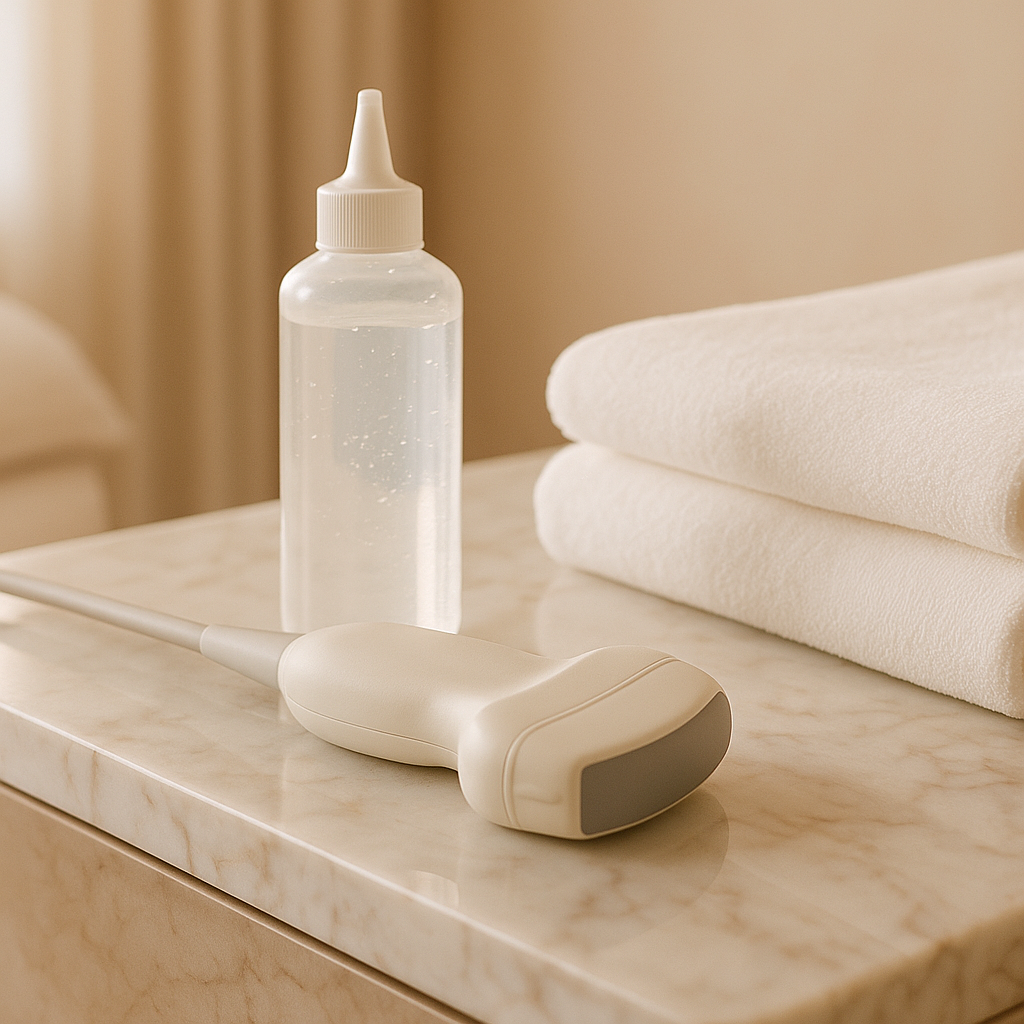
The skin is cleansed and ultrasound gel is applied. The provider scans the planned area and assesses relevant anatomy. In patients with prior filler, imaging may help identify whether material remains and its approximate location. This can prevent unnecessary product layering and help determine whether dissolution, observation, or a revised placement plan is more appropriate.
Step 3: Product and technique selection
The provider selects a filler based on rheology—the product’s firmness, cohesivity, and lifting or spreading behavior—and the tissue plane. Softer HA fillers may be selected for fine lines or lips, while more structural products may be considered for cheeks, chin, or jawline. Cannula or needle choice depends on the anatomy and treatment goal. Ultrasound can be used again during selected portions of treatment, rather than continuously for every injection.
Step 4: Injection and immediate assessment
Topical numbing may be used, and many HA fillers contain lidocaine. Treatment commonly takes 30 to 60 minutes, although a new-patient consultation or complex imaging case may take longer. Mild pressure, pinching, and temporary tenderness are common. The provider assesses symmetry and tissue response conservatively; adding filler gradually is often safer and more natural than overcorrecting in one appointment.
Step 5: Aftercare and follow-up
Most patients return to normal daily activities the same day. Avoid strenuous exercise, alcohol, excessive heat, facial massage unless specifically instructed, and pressure on the treated area for the period your provider recommends—often 24 hours. Swelling and bruising may occur; lips and under-eyes can swell more noticeably. Initial swelling usually improves over several days, while final settling can take about two weeks.
Contact your provider immediately for severe or escalating pain, blanching or dusky skin color, mottling, unusual coolness, vision changes, or any concern after filler. Do not wait for a routine follow-up if these symptoms occur.
How long do ultrasound-guided dermal filler results last?
Ultrasound changes the planning, not the filler’s longevity
The imaging itself does not make filler last longer. Longevity depends on the product, injection depth, treatment area, metabolism, facial movement, amount used, and individual biology. In general, HA filler results may last approximately 6 to 18 months. Lips commonly require maintenance around 6 to 12 months, while cheek, chin, and jawline treatments may last 12 to 18 months or longer in some patients.
Swelling can make the result look fuller during the first few days. A two-week review window is a more realistic time to judge settled contour and symmetry. For patients considering a broader plan, personalized dermal filler treatments can be combined thoughtfully with skin-quality treatments rather than repeatedly adding volume to one area.
Filler versus biostimulators for longer-term collagen support
HA filler provides immediate contour and is reversible with hyaluronidase when medically appropriate. Sculptra Aesthetic, made of poly-L-lactic acid, is a collagen stimulator rather than a conventional HA gel. It is typically used in a series, develops gradually over weeks to months, and may last about two years or more after a completed treatment plan. It is not dissolved with hyaluronidase and is not interchangeable with HA filler.
For Pasadena patients with diffuse cheek hollowing or age-related volume loss, Sculptra collagen-stimulating treatment may be discussed as an alternative or complement. The best option depends on whether your priority is immediate contour, gradual volume restoration, reversibility, or skin-quality support.
What do ultrasound-guided dermal fillers cost in Pasadena, CA?
Typical Pasadena investment ranges
Pricing should be transparent because treatment cost is central to an informed decision. In Pasadena and the greater Los Angeles market, standard HA dermal filler commonly ranges from approximately $700 to $1,100 per syringe. Premium structural fillers, complex areas, and provider expertise can place pricing toward the higher end. A subtle lip enhancement may use one syringe or less, while cheeks, chin, jawline, or full facial balancing often require two to six or more syringes over one or multiple visits.
When ultrasound mapping or real-time guidance is included, patients may see an additional $150 to $500+ charge, or a higher bundled treatment fee. A complex correction of old filler, a vascular-risk assessment, or imaging across multiple areas may require more time than a first-time straightforward cheek treatment. A realistic total investment is often:
- One-area HA filler treatment: about $700 to $1,300.
- Ultrasound-assisted high-risk or prior-filler assessment plus treatment: about $900 to $1,800+.
- Multi-area facial balancing with imaging as indicated: about $2,000 to $5,000+.
- Dissolving prior HA filler: commonly quoted separately after examination; cost varies by amount, location, and the required hyaluronidase.
These are market estimates, not a quote or guarantee. Your exact cost at Akari Medspa depends on the product selected, number of syringes, whether ultrasound is clinically indicated, and the complexity of your anatomy and goals. Choosing solely by the lowest per-syringe price can be costly if the plan is not appropriate; injector training, product authenticity, emergency readiness, and conservative planning have tangible value.
Is it worth paying more for ultrasound?
For a simple, low-risk treatment with no prior filler, some patients may decide standard injection by a highly qualified provider is appropriate. For high-risk zones, correction work, or unknown prior filler, the incremental cost of imaging may be worthwhile because it can clarify anatomy and reduce avoidable uncertainty. The most useful question is not “Is ultrasound always necessary?” but “What specific decision will ultrasound help my provider make in my case?”
Ultrasound-guided fillers vs traditional fillers: what is the difference?
A practical comparison for decision-stage patients
Traditional filler treatment relies on clinical evaluation, facial anatomy education, palpation, surface landmarks, and injection technique. It remains the standard approach for many aesthetic treatments. Ultrasound-guided treatment adds a real-time view below the skin before or during selected injections.
| Consideration | Traditional filler approach | Ultrasound-guided filler approach |
|---|---|---|
| Anatomy assessment | Surface landmarks, palpation, and anatomical knowledge | Adds live visualization of selected tissue planes, vessels, and potential old filler |
| Appointment time | Often 30–60 minutes | May take longer because of mapping and image interpretation |
| Cost | Standard product and injection fee | Usually includes an additional imaging or complexity fee |
| Best use cases | Many routine, uncomplicated filler treatments | Prior filler, revision work, high-risk areas, and patients seeking added anatomical information |
| Safety | Depends heavily on provider training and protocol | Adds information for planning; does not eliminate risks |
Patients also compare filler with wrinkle relaxers. Botox Cosmetic and similar neuromodulators temporarily reduce muscle contraction, making them useful for dynamic lines such as forehead lines, frown lines, and crow’s feet. Fillers restore or refine volume and contour. For jaw tension, masseter Botox and wrinkle-relaxer treatment may reduce the force of the masseter muscle, whereas chin or jawline filler addresses structural projection and contour. These treatments can complement each other but solve different problems.
How should you choose a provider for ultrasound-guided dermal fillers in Pasadena?
Questions worth asking at your consultation
A premium aesthetic treatment should feel unhurried and medically grounded. Ask who will perform the injections, what their license and injectable training are, how often they use ultrasound, whether they can explain the images, and how they respond to a suspected vascular complication. Ask to see before-and-after photographs of comparable concerns, while remembering that your facial anatomy and result will be unique.
You can also ask whether the provider uses FDA-approved filler products from authorized channels, whether a treatment is on-label or off-label, and what the plan is if you dislike the result. For HA filler, ask about hyaluronidase availability and after-hours emergency instructions. Ethical providers welcome these questions and will recommend less treatment—or no treatment—when that is the safer choice.
A tailored local approach
Akari Medspa serves patients from Pasadena and nearby San Marino, Arcadia, South Pasadena, San Gabriel, Glendale, Irvine, Costa Mesa, Huntington Beach, and Newport Beach. Many patients are looking for a polished result that still looks like them in daylight, on video calls, and at close conversational distance. That often means measured product selection, strategic placement, and a plan that respects the face rather than chasing a trend.
If you are deciding between standard and ultrasound-guided dermal fillers in Pasadena, schedule a consultation with Akari Medspa. A provider can review your history, assess the treatment area, explain realistic benefits and limitations, and recommend whether ultrasound guidance is a sensible investment for your individual safety and aesthetic goals.
Frequently asked questions about ultrasound-guided dermal fillers in Pasadena
Is ultrasound-guided filler safer than regular filler?
Ultrasound-guided filler can improve anatomical awareness by helping a trained provider visualize selected vessels, tissue planes, and prior filler. It may reduce uncertainty, particularly in complex or higher-risk cases, but it cannot eliminate vascular occlusion, bruising, swelling, infection, or other risks. Provider training, conservative technique, and emergency preparedness remain essential.
Does ultrasound-guided filler hurt more?
No. Ultrasound scanning is generally painless and feels like light pressure from a probe and gel on the skin. The injection portion feels similar to conventional filler treatment. Topical anesthetic, ice, or filler containing lidocaine may be used depending on the area and product.
Can ultrasound see old dermal filler?
Often, yes. Experienced operators can frequently identify material that appears consistent with prior filler and assess its approximate location within tissue. The appearance can vary by product, age, and tissue changes, so ultrasound findings must be interpreted alongside your treatment history and examination.
How long is downtime after ultrasound-guided dermal filler?
There is usually little to no social downtime. Mild swelling, tenderness, redness, or bruising can occur for several days, and some areas may take up to two weeks to fully settle. Plan treatments at least two weeks before an important event when possible.
Can ultrasound-guided filler be dissolved?
If the filler is hyaluronic acid, hyaluronidase may be used by a qualified medical professional to dissolve it when clinically appropriate. Ultrasound can help locate residual HA filler in some cases. Biostimulators such as Sculptra are not dissolved with hyaluronidase.
How much do ultrasound-guided fillers cost in Pasadena?
Standard HA filler in Pasadena commonly costs about $700 to $1,100 per syringe. Ultrasound assistance may add roughly $150 to $500 or be included in a higher-complexity package. The final investment depends on the area, product, number of syringes, prior filler, and whether imaging is indicated.

Isabel “Izzy” Koo, MSN, NP-BC, leads Akari Medspa with a focus on integrity, artistry, and precision. As a board-certified nurse practitioner with advanced training in aesthetic medicine, she focuses on subtle enhancements that bring out each client’s natural features. Her careful approach and strong sense of balance help turn every treatment into a thoughtful, personalized experience built on trust.