
K-Beauty Injectable Treatments and Skin Boosters: Juvelook, Rejuran, and SkinVive Compared
K-beauty injectable treatments and skin boosters are changing how patients in Newport Beach and Pasadena approach dullness, fine lines, acne-scar texture, and early volume loss. Rather than creating a dramatically “filled” look, these treatments can improve skin quality through hydration, collagen stimulation, or a combination of these mechanisms. The right choice depends on your anatomy, pigment concerns, tolerance for downtime, and the product’s regulatory status and availability.
Quick Answer
K-beauty injectable treatments and skin boosters are not interchangeable: SkinVive is an FDA-approved intradermal hyaluronic-acid microdroplet treatment for cheek smoothness; Juvelook combines hyaluronic acid with PDLLA for gradual collagen-support goals in markets where it is lawfully available; and Rejuran refers to polynucleotide products used internationally for skin-quality goals. A qualified Newport Beach or Pasadena injector should match the product, treatment plan, and legal availability to your skin and safety needs.
What Are K-Beauty Injectable Treatments and Skin Boosters?
A skin booster is a minimally invasive injectable intended primarily to improve skin quality—hydration, luminosity, elasticity, crepey texture, and fine lines—rather than to project the cheek, sculpt a jawline, or substantially enlarge lips. “K-beauty” describes the Korean aesthetic emphasis on healthy-looking, hydrated, even-toned “glass skin,” but it is not a medical classification or a guarantee that every Korean product is FDA approved or available in the United States.
Hydration, biostimulation, and volume are different goals
SkinVive by Juvéderm is a smooth, cross-linked hyaluronic acid (HA) microdroplet gel made by Allergan Aesthetics. HA binds water in the dermis, and SkinVive is intended to improve cheek skin smoothness rather than provide structural contour. SkinVive is FDA approved for improving skin smoothness of the cheeks in adults age 21 and older.
Juvelook Skin is generally described as a hybrid injectable containing non-cross-linked HA plus PDLLA (poly-D,L-lactic acid) microparticles. The HA component may support an early hydrated appearance; PDLLA is intended to support gradual collagen production. Juvelook Volume is a different, more volumizing PDLLA/HA formulation and should not be assumed to be appropriate for superficial skin-booster placement. Juvelook products should not be described as FDA approved or FDA cleared in the United States unless the exact product has verifiable current FDA authorization and lawful U.S. marketing status.
Rejuran is a brand associated internationally with polynucleotide (PN) skin-quality products, including injectable formulations in certain countries. Polynucleotides are purified DNA fragments that are marketed for skin-quality and tissue-support goals. Exact Rejuran formulation names, routes of administration, distribution, and regulatory pathways vary by country. Patients should never assume that a product seen on social media is FDA approved, legally marketed, or available for injection in the U.S.
At Akari Medspa, consultation should begin with the result you want—dewier cheeks, scar remodeling, fine-line improvement, pigment support, or structural facial balancing—not a trend-driven product request. Patients who also need contour correction may benefit from a separate discussion of natural-looking dermal fillers, which work differently from skin boosters.
How Do Juvelook, Rejuran, and SkinVive Compare in Newport Beach and Pasadena?
The clearest way to compare Juvelook, Rejuran, and SkinVive is by ingredient, primary objective, timeline, and U.S. regulatory status—not by the promise of “glow.” A good plan may include one treatment, staged treatments, or a different modality altogether.
Side-by-side comparison
| Treatment | Main category/ingredient | Best-known goal | Typical treatment series | Onset and longevity | U.S. status considerations |
|---|---|---|---|---|---|
| SkinVive | Cross-linked hyaluronic acid microdroplets | Cheek smoothness and hydration | Often one treatment; touch-up individualized | Improvement can appear over days to weeks; clinical benefit may last about 6 months | FDA approved for adult cheek smoothness |
| Juvelook Skin | HA + PDLLA biostimulator | Texture, fine lines, pores, gradual collagen-support goals | International protocols commonly use 2–3 sessions about 4–6 weeks apart | Hydration may appear earlier; collagen-related change develops gradually and duration varies | Do not assume FDA approval, clearance, or lawful U.S. availability; verify the exact product and sourcing |
| Juvelook Volume | Higher-volume PDLLA/HA biostimulator | Gradual volume support in selected planes | Protocol is individualized and product-specific | Gradual; duration varies by product, area, and treatment plan | Not interchangeable with Juvelook Skin; do not assume FDA approval, clearance, or lawful U.S. availability |
| Rejuran injectable formulation (if lawfully available) | Polynucleotide-focused skin-quality treatment | Fine lines, texture, and skin-quality goals | International protocols often use a series; exact schedule depends on the formulation | Gradual changes and maintenance needs vary by product and protocol | Confirm the exact injectable formulation, current lawful U.S. availability, and regulatory status before treatment |
Ranges above are planning estimates, not promises. Metabolism, injection depth, sun exposure, smoking, active inflammation, skin-care routine, and the number of sessions all influence duration.
Which produces hydration versus collagen remodeling?
SkinVive is the most straightforward option when the primary concern is cheek smoothness with an FDA-approved HA product. Juvelook is often considered internationally when a patient wants a hybrid approach: early HA-associated hydration plus delayed PDLLA collagen-support goals. Rejuran is typically sought internationally for skin-quality goals, but it should be assessed with particular care because the formulation and regulatory status may differ between Korea and the U.S.
For patients deciding between biostimulation and a stronger immediate contour change, Sculptra collagen-stimulator treatment is a separate category. Sculptra is FDA approved for certain facial lipoatrophy and cosmetic facial-wrinkle indications; trained injectors may also use it off-label for selected aesthetic collagen-stimulation goals. It is not a skin booster and does not create the same superficial hydration effect.
Who Is a Good Candidate for Skin Boosters in Newport Beach and Pasadena?
A strong candidate is an adult with realistic expectations who wants improved skin quality rather than a surgical lift or dramatic volume restoration. In Newport Beach, Irvine, Costa Mesa, and Huntington Beach, common concerns include sun-associated dehydration, early etched lines, and uneven texture. In Pasadena, San Marino, San Gabriel, Arcadia, Glendale, and South Pasadena, patients often request a polished but undetectable result that fits professional and social schedules.
Patients who may benefit
Skin boosters may suit patients with dehydrated-looking cheeks, early fine lines, dullness, enlarged-pore appearance, mild textural irregularity, or skin that looks less resilient despite a consistent topical routine. Juvelook may be considered, where lawfully available, for selected acne-scar and collagen-quality concerns. A provider must assess scar type, skin thickness, active acne, facial asymmetry, and the risk of post-inflammatory hyperpigmentation, particularly in melanin-rich skin.
Who should postpone or choose another option?
Defer injectable treatment during pregnancy or breastfeeding because safety has not been established; with an active rash, acne flare, herpes outbreak, skin infection, fever, or a recent dental infection; or when there is a known allergy to a product component. People with a history of severe allergies, autoimmune disease, keloid tendency, bleeding disorders, immunosuppression, or prior filler complications need individualized medical review. Active cystic acne, deep rolling scars, pronounced laxity, or substantial facial deflation may require acne care, subcision, energy-based treatment, filler, biostimulation, or surgery instead.
How Much Do Juvelook, Rejuran, and SkinVive Cost in Newport Beach and Pasadena in 2026?
In 2026, a realistic Newport Beach and Pasadena skin-booster investment is approximately $650–$1,100 for SkinVive cheek treatment. Pricing for Juvelook or Rejuran should be provided only after the practice verifies the exact product, lawful U.S. availability, treatment protocol, and sourcing. A full multi-session plan can total several thousand dollars depending on the product, treatment area, session count, and adjunctive treatments.
Why quotes vary
Price should reflect the actual product, lot tracking, sterile technique, anatomical planning, follow-up policy, and injector training—not simply the lowest advertised “per syringe” rate. Juvelook Volume plans may cost more when a lawful product and appropriate protocol are available because volume goals can require more product and a different injection strategy. Rejuran pricing deserves special scrutiny: ask the practice to identify the exact formulation, its source, and its current lawful U.S. status.
A consultation is the only responsible way to quote a precise plan. Beware of unusually low local offers that do not disclose product origin, quantity, injector credentials, or what happens if a complication occurs.

What Should You Expect at a Skin Booster Appointment at Akari Medspa?
At Akari Medspa in Newport Beach, a responsible appointment should prioritize medical screening, product transparency, and a conservative plan rather than an aggressive one-visit transformation. Most injection appointments take approximately 30–60 minutes after consultation and consent; numbing can add 20–30 minutes.
Step-by-step treatment process
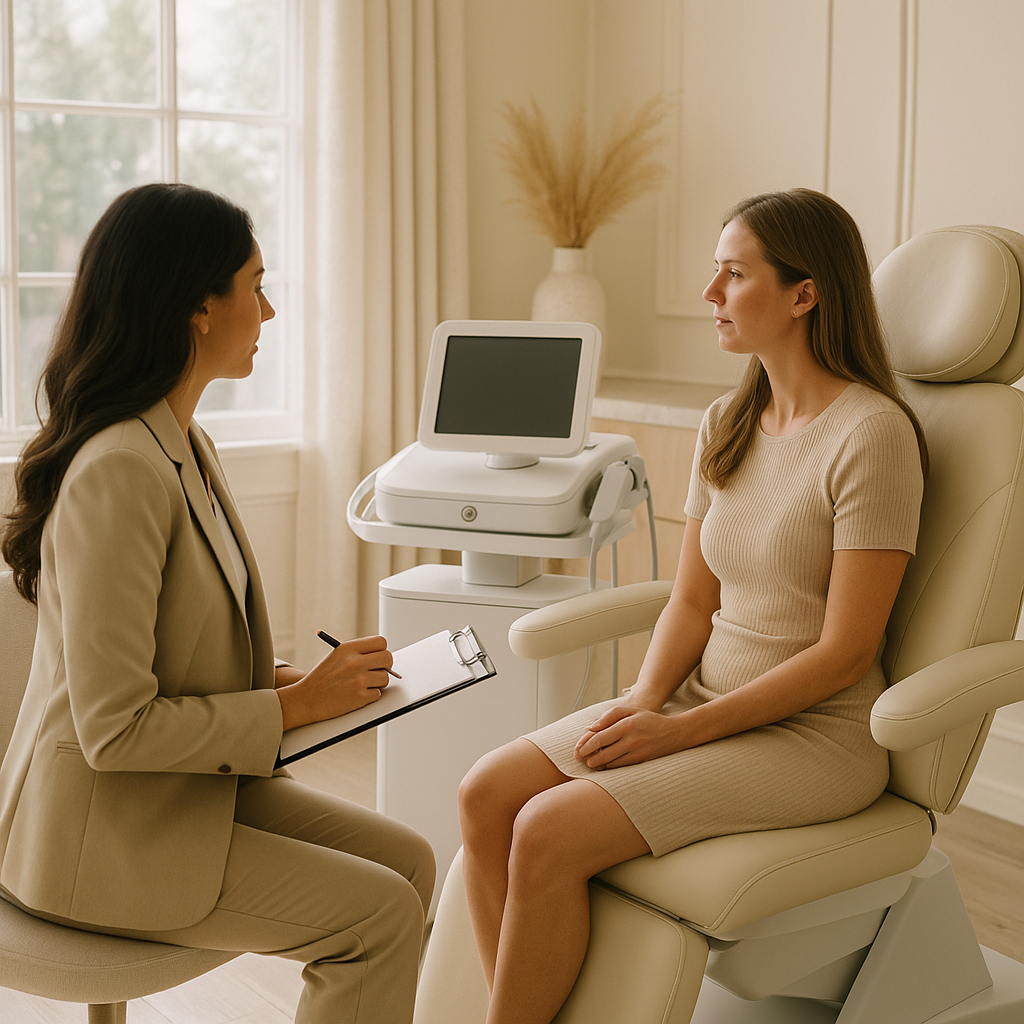
- Consultation and facial assessment: The provider reviews goals, health history, allergies, past injectables, medications, prior herpes outbreaks, and photographs. They assess skin quality, dynamic movement, facial volume, and asymmetry.
- Product and consent review: You should be told the exact product, expected benefit, alternatives, likely number of sessions, whether use is FDA approved or off-label when applicable, and material risks. For products without FDA authorization, the provider should explain the product’s lawful U.S. marketing status. Ask to see sealed packaging and lot documentation when appropriate.
- Preparation: Makeup is removed, the skin is cleansed, and topical anesthetic may be applied for 20–30 minutes. Some plans may use ice or vibration for comfort.
- Injection mapping and treatment: The injector uses a fine needle or cannula, depending on the product, area, and safety plan. SkinVive is generally placed as intradermal microdroplets in the cheeks. Technique for PDLLA/HA and PN products must be formulation-specific.
- Immediate review: Mild pinpoint bleeding, bumps, redness, swelling, and tenderness can occur. Your provider checks symmetry and gives written aftercare.
- Follow-up and maintenance: A reassessment is commonly planned at 2–4 weeks for SkinVive or after each session in a series. Collagen-stimulating results are evaluated later because remodeling is gradual.
Preparation and aftercare
Unless your own clinician says otherwise, avoid alcohol for 24 hours before and after treatment and avoid nonessential blood-thinning supplements or medications only with approval from the clinician who prescribed them. Arrive without makeup if possible. After treatment, avoid vigorous exercise, sauna/steam, substantial heat exposure, facial massage, and makeup for about 24 hours unless your injector provides different instructions. Use sunscreen daily—particularly important for Newport Beach outdoor lifestyles—and do not schedule treatment immediately before a wedding, photoshoot, or major event.
What Is Recovery Like, and How Long Do Results Last?
Most patients return to desk work and normal low-key activities the same day, but “no downtime” does not mean “no visible recovery.” Redness, swelling, tenderness, itching, small raised papules at injection points, and bruising are common short-term effects. These usually improve within 24–72 hours; bruising can last 7–14 days. More superficial techniques or areas with thin skin may look bumpy longer.
Results timeline by treatment
SkinVive can create a hydrated, smoother cheek appearance over several days to a few weeks and may last about six months. With Juvelook, where lawfully available, an initial HA-associated hydration effect may be noticed early, while PDLLA-associated collagen-related changes generally develop gradually over weeks to months. Rejuran injectable protocols used internationally commonly emphasize a series of treatments, with skin-quality changes and maintenance schedules varying by exact formulation and protocol.
No injectable permanently reverses aging. UV exposure, weight change, hormonal shifts, genetics, and smoking may shorten visible benefit. Consistent sunscreen, gentle skin care, and a personalized maintenance plan are more predictive of sustained results than a single treatment alone.
Risks that require prompt medical attention
Seek urgent evaluation for severe or worsening pain, skin blanching or dusky discoloration, livedo-like mottling, vision changes, weakness, spreading redness, fever, pus, or a rapidly enlarging swelling. Although uncommon, accidental injection into or compression of a blood vessel can cause tissue injury and, in rare cases, visual complications. HA filler complications may sometimes be treated with hyaluronidase; PDLLA and polynucleotide products do not have an equivalent dissolving agent. This difference makes anatomy knowledge, cautious placement, and complication protocols essential.
Juvelook vs Rejuran vs SkinVive: Which Is Better Than Fillers, PRP, Microneedling, or Sofwave?
No treatment is universally “best.” The best choice is the one that addresses the actual limiting factor: dehydration, dermal collagen loss, scar tethering, muscle movement, fat loss, or skin laxity.
Quantified comparison with common alternatives
| Option | Primary target | Typical schedule | Downtime | Typical duration |
|---|---|---|---|---|
| SkinVive | Cheek smoothness and hydration | Often one session | 1–3 days redness/swelling; bruising possible | About 6 months |
| Juvelook Skin | Hydration plus gradual collagen-support goals | Product- and protocol-specific; international protocols often use a series | Usually 1–3 days; bruising possible | Varies; do not assume duration without verifying the exact product and protocol |
| Rejuran injectable protocol | Skin-quality support | Product- and protocol-specific; international protocols often use a series | Usually 1–3 days; papules/bruising possible | Maintenance varies by formulation and protocol |
| HA dermal filler | Shape, folds, lips, cheeks, chin, jawline | Often one session | Usually 1–14 days depending on bruising | Roughly 6–18 months by area/product |
| PRP/PRF microneedling | Surface texture and regenerative signaling | Usually 3 sessions, 4–6 weeks apart | 1–3 days redness | Several months; maintenance varies |
| Sofwave | Mild-to-moderate laxity via ultrasound heating | Often one session | Minimal to 1 day | Gradual improvement over several months; duration varies |
Traditional HA filler is better for immediate structural support in the midface, chin, jawline, lips, or nasolabial folds. Skin boosters are better when a patient says, “My skin looks tired,” not “My cheek needs projection.” PRP/PRF uses the patient’s own blood-derived concentrate and may pair well with microneedling for texture concerns; learn more about PRF and PRP regenerative treatments. Sofwave uses ultrasound energy rather than injections and may be considered for laxity, not hydration.
Unlike clinics that present every injectable as a substitute, Akari Medspa should distinguish FDA-approved indications from off-label use and product-specific availability. Many medspas use vague “Korean filler” language; patients should insist on disclosed, traceable products and an individualized safety assessment.
Why Choose Akari Medspa for Skin Boosters in Newport Beach and Pasadena?
Choose a medical-aesthetics practice based on transparent product sourcing, clinician-led consultation, conservative anatomical planning, clear consent, and an established plan for follow-up—not before-and-after images alone. Akari Medspa serves patients seeking Botox, dermal fillers, regenerative treatments, and skin-quality care with a focus on natural-looking facial balance.
Questions every patient should ask
Ask who will inject you and confirm their California license and training; whether an MD, DO, NP, PA-C, RN, or other clinician is acting within scope and under appropriate medical oversight; the exact brand and formulation; the FDA indication or off-label rationale when applicable; how complications are recognized and managed; and whether the practice uses documented lot tracking. For products without FDA authorization, ask the practice to explain the product’s lawful U.S. marketing status rather than describing the use as off-label. Board certification matters, but its relevance depends on specialty: ABMS board-certified physicians in appropriate specialties and ASPS board-certified plastic surgeons represent verifiable credentials; aesthetic training should be current and procedure-specific. Do not rely on titles alone—verify credentials directly.
For filler-based facial balancing, vascular anatomy and risk recognition are especially important. Akari Medspa also provides ultrasound-guided injections, an imaging-informed approach that may help a trained provider identify relevant vascular anatomy in selected cases. Ultrasound is a safety adjunct, not a guarantee that complications cannot occur.
Serving Newport Beach and Pasadena, Plus Surrounding Southern California Areas
Akari Medspa serves Newport Beach and Pasadena patients as well as Irvine, Costa Mesa, Huntington Beach, San Marino, San Gabriel, Glendale, Arcadia, and South Pasadena. Patients often travel for a consultation that carefully separates hydration goals from volume loss, pigment concerns, and laxity rather than defaulting to a one-size-fits-all injectable.
Whether you are near Fashion Island and coastal Newport Beach or coming from Old Pasadena and the San Gabriel Valley, schedule enough lead time before an event for swelling or bruising to resolve and for gradual collagen treatments to mature. To discuss an individualized K-beauty skin-booster plan, contact Akari Medspa at (949) 628-6949 or book online at https://akarimedspa.janeapp.com/.
Individual results, recovery time, and duration of benefit vary. This article is for general educational purposes and is not a substitute for an in-person assessment, diagnosis, or treatment recommendation from a qualified, licensed medical provider.
Frequently Asked Questions About K-Beauty Injectable Treatments and Skin Boosters
Is SkinVive the same as filler?
No. SkinVive is a hyaluronic-acid microdroplet injectable designed to improve cheek smoothness and hydration, not to create substantial cheek projection or reshape facial contours. Conventional HA fillers such as Juvéderm Voluma, Volbella, or Restylane products are selected for different structural goals and placed at different depths. SkinVive is FDA approved for improving cheek skin smoothness in adults age 21 and older. A consultation determines whether skin quality, volume loss, or both are driving your concern.
Is Juvelook FDA approved in the United States?
Patients should not assume that Juvelook is FDA approved or FDA cleared in the U.S. because it is popular in Korean aesthetic clinics or appears on social media. Product authorization, importation, distribution, and intended use are country- and formulation-specific. Ask a Newport Beach or Pasadena provider to identify the exact Juvelook formulation, its current lawful U.S. availability, and source. If that information is not transparent, do not proceed.
Is Rejuran FDA approved in the United States?
Rejuran is widely known internationally as a polynucleotide-focused skin-quality brand, but a patient should not equate international popularity with FDA approval or lawful injectable availability in the United States. Exact Rejuran products and formulations are market-specific, and some similarly named products may not be injectable. Before treatment, request the exact product name, manufacturer documentation, U.S. regulatory status, sourcing information, and a complete risk-and-benefit discussion. A medically supervised consultation is essential.
How many Juvelook treatments do I need?
International Juvelook Skin protocols commonly use two to three sessions spaced about four to six weeks apart, followed by maintenance based on response. The appropriate number depends on whether the concern is dehydration, acne-scar texture, fine lines, pores, or early laxity; skin thickness and previous treatments also matter. Juvelook Volume has a different purpose and may follow a different plan. Because collagen-related changes are gradual, results should be judged over weeks to months rather than the day after injection. Treatment should only be considered after verification of the exact product’s lawful U.S. availability and appropriate clinical protocol.
Does Rejuran hurt, and what is the downtime?
Injectable polynucleotide treatments used internationally can be uncomfortable because they are often placed in multiple superficial injection points. Topical anesthetic, ice, or other comfort measures may be used. Expect temporary redness, swelling, tenderness, small raised papules, and possible bruising. Most visible effects improve in one to three days, while bruising can last one to two weeks. Avoid scheduling any injectable immediately before a major event, and seek prompt care for severe pain, color change, or visual symptoms. Confirm that the exact injectable product is lawfully available before treatment.
Which is better for acne scars: Juvelook, Rejuran, or microneedling?
The answer depends on scar type. Rolling scars may need subcision because tethering below the skin is the main issue; ice-pick scars may need focal procedures; and post-inflammatory discoloration needs pigment-safe treatment. Juvelook may be considered, where lawfully available, for collagen-quality goals, while polynucleotide protocols are often sought internationally for skin quality and microneedling can help texture through controlled micro-injury. Most meaningful acne-scar plans combine modalities over several months. No injectable reliably removes every scar.
Can SkinVive be used under the eyes or in the lips?
SkinVive’s FDA-approved indication is cheek skin smoothness, not lips or the tear trough. Under-eye skin is thin and anatomically high risk, while lips have distinct movement and vascular considerations. A clinician may discuss alternative products or off-label approaches only after a thorough assessment, but an FDA-approved cheek indication should not be generalized to all facial areas. Persistent under-eye hollowing, pigment, bags, and fine lines have different causes and require different treatments.
How long should I wait to exercise after a skin booster?
Most injectors recommend avoiding vigorous exercise, heated yoga, sauna, steam rooms, and substantial heat exposure for about 24 hours after a skin booster, unless your specific provider gives different instructions. These activities can worsen swelling, redness, and bruising. Light walking is generally reasonable if you feel well. Avoid facial massage and makeup for the period advised by your injector, commonly about 24 hours. Follow the written aftercare for your exact product and injection technique.
Where is the best place to get K-beauty skin boosters in Newport Beach or Pasadena?
The best practice is one that confirms the exact product’s legal availability, discloses sourcing and regulatory status, evaluates your skin in person, and has a clear complication protocol. Akari Medspa serves Newport Beach and Pasadena-area patients with consultation-led planning for skin boosters, fillers, PRP/PRF, and collagen-focused treatments. Ask to verify your injector’s California license, procedure-specific training, product lot information, and whether the recommendation is FDA approved or off-label before scheduling treatment. For a product without FDA authorization, ask about its lawful U.S. marketing status rather than referring to the use as off-label.

Isabel “Izzy” Koo, MSN, NP-BC, leads Akari Medspa with a focus on integrity, artistry, and precision. As a board-certified nurse practitioner with advanced training in aesthetic medicine, she focuses on subtle enhancements that bring out each client’s natural features. Her careful approach and strong sense of balance help turn every treatment into a thoughtful, personalized experience built on trust.