Is Facial Filler Safe? An Evidence-Based Guide to Avoiding Overfilled Results and Choosing an Injector
Facial filler can create refined, natural-looking support for cheeks, lips, chin, jawline, under-eyes, and smile lines—but only when product choice, facial anatomy, and conservative technique are prioritized. For patients asking “is facial filler safe?” in Newport Beach and Pasadena, the honest answer is that fillers have meaningful benefits and real risks. A qualified medical injector, an individualized plan, and a willingness to say “not yet” are essential to avoiding an overfilled or unsafe result.
Quick Answer
Facial filler is generally safe when an appropriately trained medical injector uses an FDA-approved filler product for an appropriate indication, conservative dosing, sterile technique, detailed anatomical assessment, and an emergency protocol for vascular occlusion. Risks include bruising, swelling, lumps, delayed inflammation, and rare tissue-threatening vessel blockage. Natural results depend more on strategic placement and staged treatment than on using more filler.
What Is Facial Filler, and How Does It Work Safely in Newport Beach and Pasadena?
Facial fillers are injectable gels or biostimulatory products used to replace volume, improve contour, soften selected folds, and restore facial proportion. Most first-time filler patients in Newport Beach and Pasadena are considering hyaluronic acid (HA) filler because it provides immediate correction and, in many circumstances, can be dissolved with hyaluronidase if medically necessary.
Hyaluronic acid fillers and facial anatomy
HA is a sugar molecule naturally present in skin and connective tissue, where it binds water. Injectable HA fillers are cross-linked gels designed to remain in tissue for a limited period. FDA-approved HA filler products are available within brands such as Juvéderm from Allergan Aesthetics, Restylane from Galderma, and the RHA Collection from Revance, each for specific labeled indications. Different gels have different cohesivity, elasticity, lift capacity, and intended injection depths.
A thoughtful treatment plan accounts for the skin, fat compartments, retaining ligaments, bone structure, muscle movement, and blood-vessel pathways in the face. For example, cheek volume loss may make nasolabial folds look deeper, while chin retrusion can affect jawline balance. Placing product only into the line a patient sees may not always be the safest or most natural solution. Our facial balancing approach in Newport Beach and Pasadena focuses on proportion rather than chasing every crease.
What filler can—and cannot—do
Filler can add structure to the midface, chin, temples, lips, jawline, and selected folds. It does not tighten severely lax skin, erase every expression line, replace a surgical facelift, or improve all under-eye concerns. Fine lines caused by repetitive muscle contraction may respond better to neuromodulators; texture and pigment may require skin-focused treatments. Repeatedly filling loose skin to “lift” it can create the puffy, overfilled appearance patients want to avoid.
Is facial filler FDA-approved?
Several fillers are FDA approved for specific facial indications in adults. FDA approval applies to a named product for defined uses—not to every facial area, injection technique, or provider. Off-label use is legal when a licensed clinician determines it is medically appropriate, but patients should understand when treatment is off-label, why it is recommended, and what alternatives exist.
Who Is a Good Candidate for Facial Filler—and Who Should Wait?
A good facial filler candidate in Newport Beach or Pasadena is a healthy adult with realistic goals, stable skin health, and a desire for modest structural support or volume restoration. The best candidates value balance over dramatic change and are comfortable with a staged plan rather than an immediate, high-volume transformation.
Candidates who often benefit
Patients commonly consider filler for mild-to-moderate cheek flattening, temple hollowing, lip asymmetry, chin projection, jawline definition, marionette lines, and selected nasolabial folds. People with early volume loss from aging, genetics, weight changes, or sun exposure may benefit from carefully placed HA filler. Men and women alike often request a refreshed appearance that still looks like them at Fashion Island, on video calls, or during professional and social events.
When treatment should be postponed or reconsidered
Treatment should be deferred with an active skin infection, open lesion, severe acne flare in the treatment area, unexplained swelling, recent dental infection or invasive dental work near the planned area, or pregnancy and breastfeeding because safety data are limited. Patients with a history of severe allergies, autoimmune disease, prior filler complications, granulomas, recurrent facial swelling, bleeding disorders, or use of anticoagulants need an individualized medical review.
Filler is not automatically the right choice for prominent under-eye bags, advanced jowling, marked skin laxity, body dysmorphic disorder, or a request to replicate a filtered photograph. An ethical injector may recommend no treatment, skin rejuvenation, weight stability, a surgical opinion, or time to reconsider. Saying no can be a safety feature, not a missed opportunity.
How Do Overfilled Facial Filler Results Happen, and How Can They Be Prevented?
Overfilled filler results usually develop from excessive volume, repeated treatment before prior filler has been assessed, placing filler in the wrong tissue plane, treating isolated lines instead of the whole face, or trying to use filler as a substitute for surgery or skin tightening. “Filler blindness” can occur when patients and injectors gradually adapt to increasing volume and no longer recognize loss of natural facial transitions.
The conservative, staged-treatment principle
A safer plan begins with the smallest amount likely to create a visible but believable improvement. In practice, this may mean treating one or two priority areas, allowing swelling to settle for about two weeks, then reassessing. Many patients need less product than they expect once structural areas—such as cheek, chin, or pre-jowl support—are evaluated. Photographs in consistent lighting and a clear baseline plan help prevent cycle-after-cycle overcorrection.
Signs a plan may be too aggressive
Warning signs include a provider recommending many syringes without examining your face dynamically, promising a fully transformed result in one appointment, dismissing your concern about looking “done,” or proposing more filler to correct puffiness without discussing whether old filler should be mapped, monitored, or dissolved. Migration is often used loosely online; the actual cause of fullness may be residual product, swelling, tissue changes, superficial placement, or excessive volume. It requires an in-person assessment rather than a social-media diagnosis.
Product selection matters
Softer, more flexible gels may suit mobile areas such as lips, while firmer structural gels may be appropriate in carefully selected deeper planes. Product choice alone cannot make treatment safe: correct indication, depth, volume, and injector judgment matter more. For patients considering deeper or higher-risk areas, ultrasound-guided filler injections can provide real-time visualization of some vessels and existing filler; however, ultrasound does not eliminate risk and never replaces anatomical expertise or emergency readiness.
What Are the Risks of Facial Filler and What Happens in an Emergency?
Most facial filler side effects are temporary: tenderness, redness, swelling, itching, and bruising typically improve within several days to two weeks depending on the area and product. Lips and under-eyes may swell more noticeably than cheeks or chin. Lumps, asymmetry, prolonged swelling, infection, delayed inflammatory reactions, and visible product are less common but possible.
Vascular occlusion: the rare but urgent risk
The most serious filler complication is vascular occlusion, in which filler compromises blood flow in or around a vessel. It is uncommon, but it can lead to skin injury and, in exceptionally rare cases, vision loss. Higher-risk regions include the nose, glabella or frown area, forehead, temples, and nasolabial region because of complex vascular connections. No technique—including aspiration, cannula use, or ultrasound—guarantees prevention.
Potential warning signs during or shortly after injection include severe or escalating pain, blanching or unusual whiteness, dusky or net-like purple discoloration, cool skin, delayed capillary refill, vision changes, eyelid droop, severe headache, or neurologic symptoms. Vision changes are an emergency: seek emergency care immediately and notify the injector. Patients should not wait overnight or attempt to manage these symptoms at home.
Emergency preparedness and hyaluronidase
A responsible HA-filler practice should have a documented complication plan, emergency supplies, prompt access to hyaluronidase, and a pathway for escalation to emergency, ophthalmology, dermatology, or plastic-surgery care when indicated. Hyaluronidase is an enzyme used to break down HA filler; it is not a reversal agent for non-HA fillers such as poly-L-lactic acid or calcium hydroxylapatite. It can be invaluable in an HA emergency, but it may also reduce naturally occurring HA and carries its own rare allergy risk.
Ask your injector directly: “What is your vascular-occlusion protocol, where is your hyaluronidase, and what happens if I have a complication after hours?” A clear answer is part of informed consent.
How Much Does Facial Filler Cost in Newport Beach and Pasadena in 2026?
Facial filler in Newport Beach and Pasadena typically costs about $650 to $1,200 per syringe in 2026 for FDA-approved hyaluronic acid products. Total cost depends on the product selected, treatment area, number of syringes, injector expertise, and whether ultrasound assessment is clinically appropriate. A safe consultation should focus on a plan—not a low advertised “per syringe” price.
Typical 2026 local investment ranges
| Treatment area or goal | Typical Newport Beach and Pasadena range |
|---|---|
| Lip filler, often 0.5–1 syringe | $650–$1,200 |
| Nasolabial folds or marionette lines, often 1–2 syringes | $800–$2,200 |
| Cheek enhancement, often 1–2 syringes | $1,400–$2,400 |
| Chin projection or contour, often 1–2 syringes | $1,400–$2,400 |
| Jawline contour, often 2–4 syringes | $1,600–$4,800 |
| Under-eye filler, selected candidates | $800–$1,500+ |
| Ultrasound-guided assessment or injection | Varies by clinical plan |
These are market estimates, not a quote or guarantee. A cheaper treatment can become more expensive if it produces an avoidable complication or requires correction. Conversely, more syringes are not inherently better. Patients comparing dermal filler treatment options should ask what product is being used, whether the quoted amount is per syringe, and why each syringe is medically and aesthetically indicated.
Does insurance cover filler?
Cosmetic facial filler is generally not covered by health insurance. Payment plans may be available through some practices, but financing should never pressure a patient into more treatment than they want or need.

What Should You Expect at a Facial Filler Appointment at Akari Medspa?
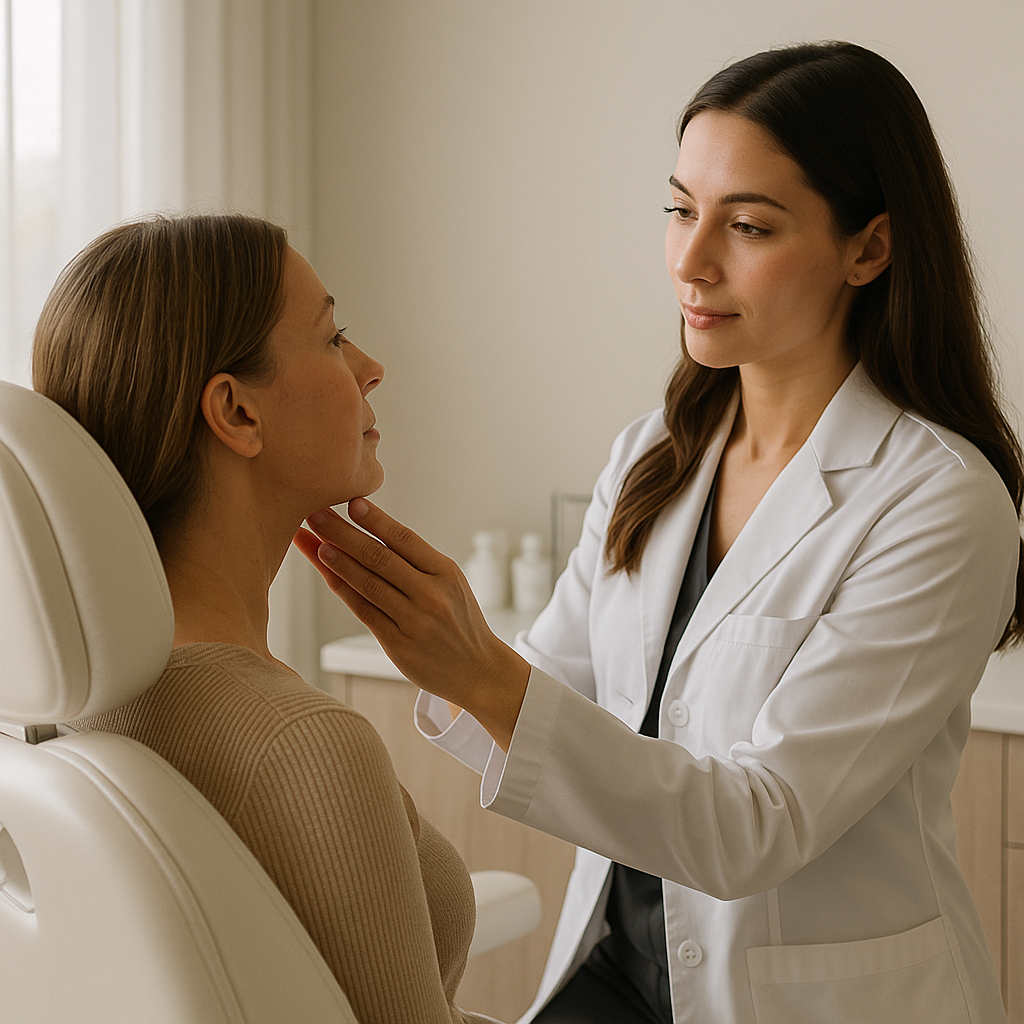
A facial filler appointment at Akari Medspa should be a medical-aesthetic assessment, not a rushed transaction. Plan for approximately 45 to 90 minutes for an initial consultation and treatment, depending on the complexity of the plan. Follow-up assessment is commonly scheduled around two weeks after HA filler.
Step-by-step appointment process
- Medical history and goal discussion: Your provider reviews allergies, medications, prior filler, medical conditions, dental history, previous reactions, and your priorities. Bring records or photos of prior injections if available.
- Facial assessment: The injector evaluates facial proportions at rest and in motion, skin quality, asymmetry, volume loss, and whether filler is appropriate. Standardized photographs may be taken with consent.
- Plan and consent: You discuss product options, intended placement, expected number of syringes, alternative treatments, expected recovery, costs, and meaningful risks including vascular occlusion. You should have time to ask questions.
- Preparation: Makeup is removed from treatment sites, skin is cleansed, and topical numbing may be used. Many HA fillers also contain lidocaine.
- Precise injection: The provider places small amounts of filler with a needle, cannula, or a combination, continuously assessing contour and tissue response. Certain cases may benefit from ultrasound visualization.
- Immediate review: The provider checks symmetry and circulation, gives aftercare instructions, and explains which symptoms require urgent contact.
- Follow-up and staging: Swelling settles over days to two weeks. Further correction, if needed, is approached conservatively after reassessment—not automatically at the first visit.
How Long Does Facial Filler Last, and What Is Recovery Like?
Facial filler longevity varies by product, area, metabolism, injection depth, movement, and amount used. Most HA fillers visibly last about 6 to 18 months. Lip filler often lasts around 6 to 12 months; cheeks, chin, and jawline can last approximately 12 to 18 months or longer in some patients. Filler does not disappear on a perfect schedule, so repeat treatment should be based on assessment rather than a calendar alone.
Recovery timeline
Most people return to desk work, errands, or social plans the same day. Expect mild swelling, tenderness, and possible bruising for 2 to 7 days; residual swelling can take up to two weeks to fully settle. Lip and tear-trough treatments may require more social downtime. Avoid strenuous exercise, significant heat exposure, alcohol, facial massage unless instructed, and pressure on the treated area for at least 24 hours. Sleep with the head elevated if swelling is bothersome.
Normal versus concerning recovery
Mild unevenness immediately after treatment is common because swelling is rarely identical on both sides. Contact the practice for worsening pain, expanding redness, heat, drainage, fever, firm painful nodules, prolonged swelling, skin-color changes, or any visual symptom. Patients often feel anxious when they see early swelling; planned follow-up and realistic education prevent premature “fixes.”
Facial Filler vs Botox, Sculptra, Skin Tightening, and Surgery: Which Is Right?
Facial filler is one tool, not a universal anti-aging treatment. The right option depends on whether the primary issue is muscle movement, volume loss, skin quality, laxity, or structural anatomy.
| Treatment | Best for | Onset | Typical longevity | Key limitation |
|---|---|---|---|---|
| HA dermal filler | Volume, contour, selected folds | Immediate, settles in 2 weeks | 6–18 months | Can look heavy if overused; rare vascular risk |
| Botox Cosmetic/Dysport | Dynamic lines from muscle movement | 3–14 days | 3–4 months | Does not replace volume |
| Sculptra | Gradual collagen stimulation for appropriate patients with facial volume loss | Weeks to months | Up to about 2 years after series | Not reversible with hyaluronidase; requires proper candidate selection |
| Sofwave ultrasound | Mild-to-moderate skin laxity in appropriately selected patients | Gradual over 3–6 months | About 1 year or more | FDA-cleared device; does not create immediate volume |
| Facelift surgery | Significant laxity and jowling | Surgical recovery | Years | Surgery, cost, and downtime |
Botox Cosmetic temporarily reduces muscle activity, such as in the glabella or forehead, while filler supports volume. Sculptra is poly-L-lactic acid, a collagen stimulator, and is not interchangeable with HA filler. Skin-tightening devices may improve laxity but do not replace missing cheek or chin projection. A combination plan can be appropriate, but “more treatments” is not automatically a better plan. Learn how collagen-based options differ through our Sculptra treatment information.
How Do You Choose a Safe Facial Filler Injector in Newport Beach or Pasadena?
Choose an injector based on medical training, anatomy knowledge, transparent consultation, complication readiness, and a consistent aesthetic philosophy—not on social-media popularity, a flash sale, or the lowest price. Ask whether the clinician is a licensed MD, DO, NP, PA-C, RN working under appropriate medical supervision, or other qualified professional as allowed by California law. Verify licensure through the relevant California licensing board.
Questions every patient should ask
- Which exact filler brand and product do you recommend, and why?
- Is this use FDA approved or off-label?
- How many syringes are planned today, and can we stage treatment?
- What are the specific risks in this facial area?
- Do you stock hyaluronidase, and what is your written emergency protocol?
- How do you manage vascular occlusion and after-hours concerns?
- Do you use ultrasound when clinically indicated, and what are its limitations?
- Can I see unfiltered, appropriately consented before-and-after examples of similar anatomy?
Unlike clinics that prioritize a one-size-fits-all “full face” package, Akari Medspa emphasizes consultation, conservative planning, use of appropriately indicated FDA-approved products when available, and informed consent. Many medspas use vague language about “advanced injectables”; patients should always request the actual brand, lot documentation when appropriate, and a clear explanation of who is performing the procedure. No provider can promise perfection or zero risk, and the most trustworthy injector will say so.
Serving Newport Beach, Pasadena, and Surrounding Southern California Communities
Akari Medspa serves Newport Beach and Pasadena patients seeking nuanced, medically guided facial filler consultations, as well as visitors from Irvine, Costa Mesa, Huntington Beach, San Marino, San Gabriel, Glendale, Arcadia, and South Pasadena. Patients often travel for an injector who listens to concerns about puffiness, migration, safety, and maintaining an unmistakably natural appearance.
For people comparing a med spa Newport Beach experience with a medical spa Pasadena option, continuity of planning matters: your facial assessment, product history, treatment photographs, and follow-up approach should inform every future visit. Akari Medspa is a practical choice for patients who want a transparent discussion of whether filler is appropriate before committing to treatment.
Frequently Asked Questions About Facial Filler Safety
Is facial filler safe for first-time patients?
Facial filler can be safe for a first-time patient when a qualified medical injector completes a medical history, facial assessment, informed-consent discussion, and conservative plan using an FDA-approved filler product for an appropriate indication. First-time patients should not feel pressured to treat multiple areas in one session. Starting with one priority area and reassessing after swelling resolves—usually around two weeks—can reduce the risk of overcorrection and help establish your preferred aesthetic.
Can facial filler be dissolved if I do not like it?
Most hyaluronic acid fillers can be reduced or dissolved with hyaluronidase, an enzyme administered by a qualified clinician. Dissolution is not always instant, may require more than one session, and is not risk-free. Hyaluronidase does not dissolve non-HA fillers such as Sculptra or calcium hydroxylapatite. Before treatment, ask which product is being used and whether it can be reversed.
What is the safest area for facial filler?
No filler area is entirely risk-free. Cheeks and chin are often considered more forgiving than the nose, forehead, glabella, temples, and tear troughs, but safety depends on individual anatomy, injection plane, product, volume, and injector expertise. A safe provider assesses every area individually rather than describing any injection as universally safe.
Does ultrasound-guided filler make filler completely safe?
No. Ultrasound can help an experienced injector identify some blood vessels, distinguish tissue planes, and detect existing filler in selected situations. It is a valuable adjunct, particularly in complex or higher-risk cases, but it cannot visualize every vessel at every moment or eliminate the possibility of vascular occlusion. Anatomical expertise, conservative technique, and emergency preparedness remain necessary.
How many syringes of filler do I need for a natural result?
There is no universal number. Lips may need 0.5 to 1 syringe, while cheeks, chin, or jawline commonly require 1 to several syringes depending on anatomy and goals. A natural result is not determined by a syringe count; it comes from proper placement, suitable product selection, and gradual staging. Be cautious of package deals that prescribe the same number of syringes for every face.
Will filler make my face look puffy or fake?
Conservative, appropriately placed filler may help reduce the likelihood of an overfilled appearance, but no aesthetic outcome can be guaranteed. Puffiness is more likely when too much product is placed too superficially, when repeated filler accumulates without reassessment, or when filler is used to compensate for lax skin. The best prevention is a conservative injector who evaluates the whole face, uses staged appointments, and is willing to recommend alternatives or no treatment.
Can I get filler before a wedding or important event?
Plan filler at least 2 to 4 weeks before an important event, especially for lips or under-eyes, to allow bruising and swelling to resolve and to permit a follow-up assessment. For a first treatment or a major facial-balancing plan, consider scheduling even earlier. Avoid trying a new filler treatment one or two days before photographs, travel, or a wedding.
Where is the best place to get facial filler in Newport Beach or Pasadena?
The best place is one that provides a thorough medical consultation, transparent product information, conservative planning, documented emergency readiness, and qualified licensed injectors—not simply the lowest price. Akari Medspa serves Newport Beach and Pasadena patients who want individualized facial balancing and a candid discussion of filler risks, alternatives, and realistic outcomes. Contact Akari Medspa at (949) 628-6949 or book at https://akarimedspa.janeapp.com/ to schedule a consultation.
Facial filler can be a safe, effective option when the goal is thoughtful restoration rather than maximum volume. If you are considering filler in Newport Beach or Pasadena, contact Akari Medspa at (949) 628-6949 or schedule through https://akarimedspa.janeapp.com/ for an individualized consultation that puts anatomy, safety, and natural proportion first.
Individual results, treatment suitability, recovery, and longevity vary. This information is educational and is not a substitute for an in-person medical evaluation. Consult a qualified, licensed medical provider to determine whether facial filler is appropriate for you and to review the specific risks, benefits, alternatives, and whether a proposed use is FDA approved or off-label.

Isabel “Izzy” Koo, MSN, NP-BC, leads Akari Medspa with a focus on integrity, artistry, and precision. As a board-certified nurse practitioner with advanced training in aesthetic medicine, she focuses on subtle enhancements that bring out each client’s natural features. Her careful approach and strong sense of balance help turn every treatment into a thoughtful, personalized experience built on trust.