

Sofwave vs Microneedling vs TCA Peel for Acne Scars: Which Treatment Fits Your Scar Type?
Acne scars are not one condition, so there is no single “best” treatment for every texture change left after breakouts. In Newport Beach and Pasadena, the most useful comparison is Sofwave vs microneedling vs TCA peel acne scars by scar shape, depth, skin tone, pigment risk, downtime, and goals. The right plan can soften scars and improve overall skin quality—but realistic treatment selection matters more than choosing the most aggressive option.
Quick Answer
For acne scars, microneedling is usually the best starting treatment for broad, shallow rolling or boxcar scars; focal TCA CROSS is generally better for narrow ice-pick scars; and Sofwave is best for mild laxity and collagen support, not as a primary scar-removal treatment. Most patients need a customized combination plan, typically 3–6 sessions or staged procedures, for meaningful but not perfect improvement.
What Acne Scar Type Do You Have—and Why Does It Determine Treatment?
Acne scars form when inflammation damages dermal collagen during a breakout and healing creates either too little collagen (depressed, or atrophic, scars) or too much collagen (raised scars). A treatment must match the scar’s physical architecture. Treating every indentation the same way can waste time, increase post-inflammatory hyperpigmentation (PIH), or create disappointing results.
Atrophic scars: ice-pick, boxcar, and rolling
Ice-pick scars are narrow, sharply edged channels that extend deeply into the dermis. They commonly require focal treatment, such as TCA CROSS, rather than a broad collagen treatment alone. Boxcar scars have defined vertical edges and a wider base; shallow boxcars may respond to microneedling or resurfacing, while deeper scars may need subcision, punch techniques, or fractional laser referral. Rolling scars appear as waves or tethered depressions, especially under side lighting. They often respond best when tethering is first released with subcision, followed by collagen-building treatment.
Raised scars and discoloration are different problems
Hypertrophic and keloid scars are raised, firm scars caused by excess collagen. Microneedling, TCA peeling, and Sofwave are not first-line treatments for active keloids; medical evaluation, often with a dermatologist, is appropriate. Red, brown, or purple marks after acne may be post-inflammatory erythema or PIH rather than permanent scars. These can improve with pigment-conscious skincare, sun protection, vascular or pigment-specific modalities, and time—but they require a different plan than depressed scars.
At Akari Medspa, scar consultations focus on scar morphology in natural and angled light, active acne control, prior procedures, Fitzpatrick skin type, and the amount of downtime a Newport Beach or Pasadena patient can reasonably accommodate. For patients whose concern is primarily texture plus laxity, Sofwave skin tightening may be considered as one part of a broader plan rather than presented as a substitute for scar-directed treatment.
How Do Sofwave, Microneedling, and TCA Peels Work for Acne Scars?
Sofwave, microneedling, and trichloroacetic acid (TCA) affect collagen differently. None literally “releases all scars,” and none can guarantee a particular percentage of improvement. The biologic goal is controlled wound healing: stimulating new collagen and elastin, remodeling disorganized tissue, or selectively resurfacing a scar.
Sofwave: ultrasound collagen stimulation beneath the skin surface
Sofwave uses synchronous ultrasound energy to create controlled thermal effects in the mid-dermis while its integrated cooling protects the epidermis. It is FDA-cleared for specific aesthetic indications, including lifting the eyebrow, submental area, and neck and improving facial lines and wrinkles; it is not FDA-approved specifically as an acne-scar treatment. A full face treatment commonly takes about 30–60 minutes. Because it does not intentionally remove the surface layer of skin, downtime is generally minimal.
For acne scars, Sofwave may be useful when mild skin laxity makes rolling texture more apparent or when a patient wants collagen support with little social downtime. Published evidence for ultrasound energy is stronger for lifting and wrinkle improvement than for deep, established acne scars. It cannot directly break fibrous tethers like subcision, and it is unlikely to substantially improve narrow ice-pick scars by itself.
Microneedling: controlled channels and dermal remodeling
Professional microneedling uses sterile, motorized needles to create microscopic channels at selected depths, often approximately 0.5–2.5 mm depending on facial area, scar depth, and provider assessment. This controlled injury initiates a wound-healing response involving inflammatory signaling, fibroblast activity, and gradual deposition and remodeling of collagen. It is commonly used for atrophic acne-scar texture and enlarged pores.
A session typically takes 45–75 minutes, including cleansing and topical numbing. Noticeable remodeling develops gradually over 8–12 weeks, and most people pursue 3–6 treatments spaced about 4–6 weeks apart. Professional devices may be FDA-cleared for microneedling indications, but patients should understand that a device clearance does not mean every acne-scar result is guaranteed. Learn more about microneedling treatments for acne-scar texture before deciding whether its recovery fits your schedule.
TCA peel and TCA CROSS: chemical resurfacing with different intensity levels
TCA is a chemical exfoliant that causes controlled protein coagulation in the skin. A superficial or medium-depth TCA peel is applied broadly to improve uneven tone and superficial texture; the treatment depth depends on concentration, technique, skin preparation, and number of coats. TCA CROSS—Chemical Reconstruction of Skin Scars—places a high-concentration TCA solution precisely inside individual narrow scars to trigger localized collagen remodeling.
TCA CROSS is most often considered for ice-pick scars and small, sharply defined boxcar scars. It is not interchangeable with a full-face peel. Frosting, small scabs, and temporary redness are expected after correctly performed focal treatment. TCA is not FDA-approved specifically to treat acne scars. It should be performed only after an in-person assessment by a qualified medical professional because concentration, application accuracy, and PIH risk are clinically important.
Sofwave vs Microneedling vs TCA Peel for Acne Scars: Which Is Best?
For most depressed acne scars, microneedling or scar-specific TCA CROSS has a more direct role than Sofwave. The table below summarizes practical differences for Newport Beach and Pasadena patients.
| Feature | Sofwave | Professional microneedling | TCA peel / TCA CROSS |
|---|---|---|---|
| Best fit | Mild laxity, fine texture, collagen support | Broad shallow rolling and boxcar texture | TCA CROSS: ice-pick/narrow boxcar; peel: surface tone/texture |
| Primary mechanism | Mid-dermal ultrasound heating | Controlled mechanical micro-injury | Controlled chemical injury/resurfacing |
| Typical session time | 30–60 minutes | 45–75 minutes | 20–45 minutes |
| Typical treatment course | Usually 1 treatment; reassess at 3–6 months | 3–6 sessions, 4–6 weeks apart | 3–6 CROSS sessions, often 4–8 weeks apart; peel series varies |
| Visible recovery | Mild redness/swelling for hours to 2 days | Redness/tightness 24–72 hours; flaking up to 5–7 days | CROSS scabs about 5–10 days; broader peel peeling about 3–10 days |
| Timeline for collagen change | 8–12 weeks; may continue up to 6 months | 8–12 weeks after each session | Weeks to months after healing |
| Limits | Does not release tethers or target deep pits | Less effective alone for deep ice-pick or tethered scars | Higher pigment and technique-related risk, especially if poorly selected |
Best choice for rolling scars
Rolling scars often have dermal bands pulling the skin downward. Subcision is frequently the more logical first procedure when tethering is present, sometimes followed by microneedling, biostimulatory injectables, or energy-based treatment. Sofwave may support overall firmness after a scar plan, but it should not be marketed as a replacement for tether release.
Best choice for boxcar scars
Shallow boxcar scars can improve with a microneedling series, sometimes with carefully selected chemical resurfacing. Deep, sharply edged boxcars may need a combination approach, such as subcision, focal TCA CROSS, punch elevation, or referral for ablative fractional laser or surgical treatment. A clinician should determine whether the scar base is broad, tethered, or very deep before recommending a package.
Best choice for ice-pick scars
TCA CROSS is often a better match for ice-pick scars because the applicator targets the narrow channel rather than treating only the surrounding skin. Microneedling can improve overall texture around the scars but usually does not fully correct deep, narrow pits. Multiple precise sessions are commonly needed.
Who Is a Good Candidate for Acne-Scar Treatment in Newport Beach and Pasadena?
A good candidate has stable acne, realistic expectations, no active skin infection at the treatment site, and willingness to follow pre- and post-care instructions. Acne should be controlled first when possible; repeatedly treating scars while new inflammatory lesions form can lead to additional scarring.
Skin tone, melasma, and PIH considerations
Darker skin tones and anyone with a history of melasma or PIH can still be candidates, but treatment selection and preparation are especially important. Microneedling often has less pigment disruption than medium or deep chemical peeling because it does not broadly remove the epidermis, though PIH remains possible. TCA CROSS can be appropriate for selected patients but requires conservative, expert technique, strict sun avoidance, and sometimes pigment-stabilizing skincare. Sofwave has limited epidermal disruption, yet every energy treatment still requires an individualized safety assessment.
When to postpone or seek medical referral
Postpone treatment during active cystic acne, open lesions, sunburn, pregnancy when a chosen topical or procedure is contraindicated, active herpes simplex without an appropriate prevention plan, or use of medications that impair healing. Isotretinoin history should be reviewed individually with the prescribing dermatologist; modern guidance is more nuanced than a universal waiting rule, but scar procedures still need medical judgment. Refer to a board-certified dermatologist or plastic surgeon for keloids, severe tethering, suspected infection, severe dysmorphic distress, or scars likely to require surgical techniques or ablative laser resurfacing.
How Much Do Sofwave, Microneedling, and TCA Peels Cost in Newport Beach and Pasadena in 2026?
In the 2026 Newport Beach and Pasadena market, acne-scar treatment cost varies with scar count, face versus spot treatment, anesthesia, provider expertise, device, and whether a staged combination plan is needed. Exact pricing should follow an in-person assessment; low advertised prices can exclude consultation, numbing, post-care, or the number of sessions needed for a meaningful plan.
Typical local investment ranges
- Sofwave face or targeted collagen treatment: approximately $1,500–$3,500 per treatment; neck or combined areas can increase the investment.
- Professional microneedling: approximately $300–$700 per session; a three-session series is commonly $900–$1,800 before optional add-ons.
- Microneedling with PRP or PRF: often $600–$1,200 per session, depending on protocol and treatment area. PRP/PRF is an autologous blood-derived adjunct, not a guarantee of superior scar correction.
- TCA CROSS for focal scars: approximately $250–$700 per session, depending on the number and complexity of scars.
- Superficial-to-medium chemical peel: approximately $200–$800 per session; deeper resurfacing may be higher and may be better performed or co-managed by a physician specialist.
- Combination care such as subcision plus a collagen-building series: often $1,500–$5,000+ over several months, based on procedures and severity.
A higher cost can reflect genuine safety infrastructure: medical screening, sterile technique, authentic products, conservative protocols for pigment-prone skin, and adequate follow-up. It should not be assumed that a higher price guarantees a better result.
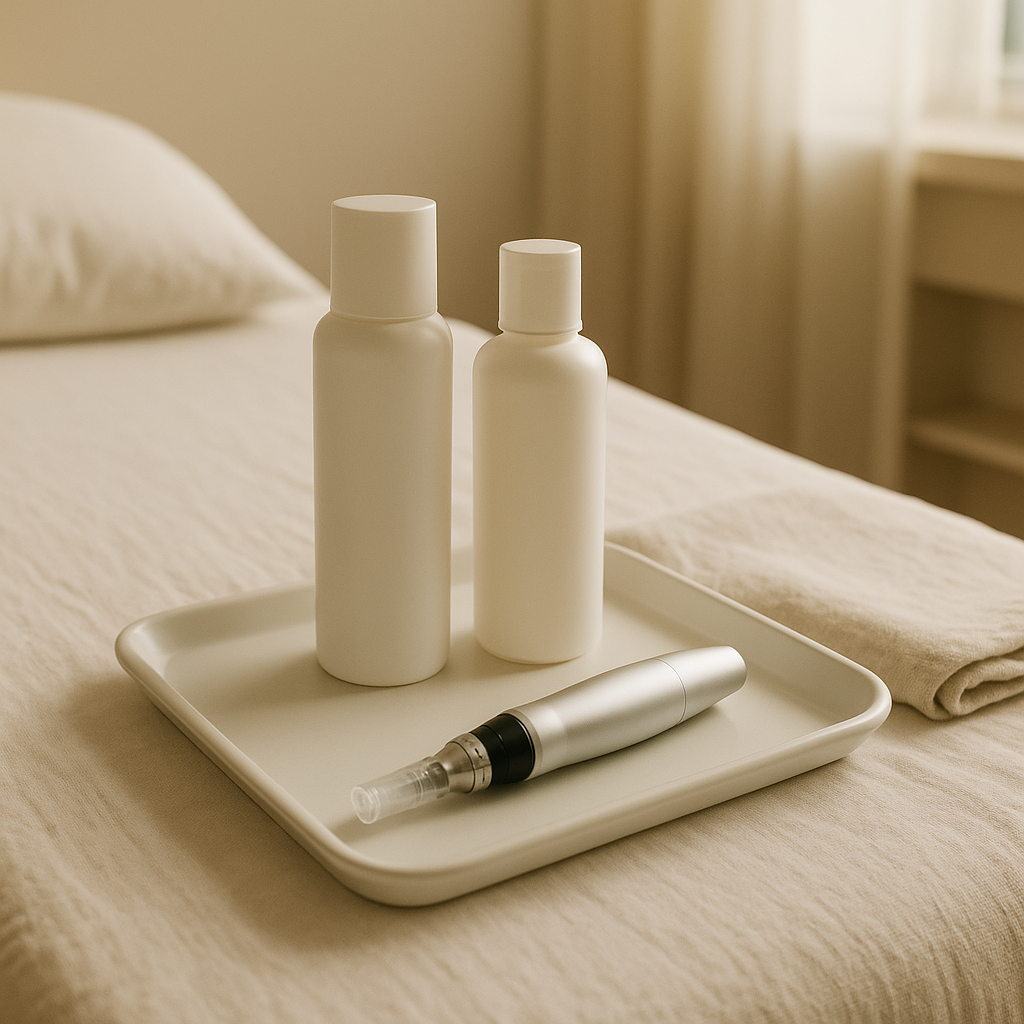
What Should You Expect at an Acne-Scar Appointment at Akari Medspa?
At Akari Medspa, a treatment plan should be based on what the scars actually are—not on a one-size-fits-all device menu. Patients commonly arrive hoping for a single solution and leave with relief that staged treatment can be planned around work, travel, events, and visible downtime.
Step-by-step treatment planning and visit process
- Consultation and skin history: A provider reviews acne activity, prior isotretinoin or scar procedures, pigment history, medications, allergies, herpes history, and desired downtime.
- Scar mapping: The skin is assessed in direct and angled light to identify ice-pick, boxcar, rolling, tethered, raised, and pigment-only concerns. Photos may document the baseline consistently.
- Treatment selection: The provider explains whether Sofwave, microneedling, TCA CROSS, a broader peel, referral, or a combination sequence is appropriate. Informed consent includes alternatives and limitations.
- Preparation: Skin is cleansed. Microneedling commonly uses topical anesthetic for roughly 20–45 minutes. Sofwave may involve topical anesthetic or other comfort measures. Chemical procedures require careful skin degreasing and precise application.
- Procedure: Microneedling takes roughly 15–30 minutes after numbing; Sofwave energy delivery often takes 30–60 minutes; focal TCA CROSS or a peel commonly takes 20–45 minutes. Sensations range from warmth and pressure to brief stinging.
- Aftercare and follow-up: You receive a tailored plan for gentle cleansing, bland moisturizer, broad-spectrum SPF 30+ or higher, makeup timing, exercise, active skincare, and warning signs. Follow-up timing depends on the procedure, commonly 4–8 weeks for scar reassessment.
What Is Recovery Like, What Results Are Realistic, and How Long Do They Last?
Recovery is usually manageable, but it should not be minimized. After microneedling, redness similar to a sunburn, warmth, pinpoint bleeding during treatment, tightness, mild swelling, and temporary roughness are common. Most people look presentable within 1–3 days, although light flaking can continue for up to a week. Avoid makeup for at least 24 hours or as directed, vigorous exercise and heat for 24–48 hours, and retinoids, exfoliating acids, or scrubs until the skin barrier has recovered.
After TCA CROSS, each treated spot typically frosts then forms a small crust that should be left alone; scabbing often lasts 5–10 days. After a broader TCA peel, peeling may be visible for 3–10 days depending on depth. Avoid picking, tanning, and unapproved actives. Contact the practice promptly for escalating pain, spreading redness, pus, blisters outside expected treatment response, or signs of infection.
Sofwave commonly causes transient redness, swelling, tenderness, or sensitivity for hours to a few days, with minimal peeling. Collagen remodeling is gradual: assess Sofwave at about 8–12 weeks, with continued change possible through 6 months; microneedling results are commonly judged 8–12 weeks after each session; and TCA CROSS remodeling unfolds over weeks to months. Improvements can be durable because new collagen is formed, but intrinsic aging, acne recurrence, sun exposure, and skin biology continue. Maintenance may be appropriate, not mandatory.
Possible risks across these treatments include discomfort, prolonged redness, swelling, bruising, acne flare, PIH or hypopigmentation, infection, cold-sore reactivation, uneven texture, scarring, and disappointing improvement. Chemical peels have a higher risk of pigment alteration or unintended depth if poorly selected or applied. Proper candidate selection and professional care reduce risk but cannot eliminate it.
Why Choose Akari Medspa for Acne-Scar Planning in Newport Beach and Pasadena?
Akari Medspa provides acne-scar consultations for patients who want a medically thoughtful plan rather than a trend-driven promise. A qualified licensed provider should review anatomy, scar type, skin tone, active acne, contraindications, and realistic recovery before treating. Ask who will perform the procedure, what their California license and procedure-specific training are, what device or chemical protocol is used, and how the practice manages complications or referral needs.
Unlike clinics that treat every scar with the same discounted device package, Akari Medspa can discuss whether a less invasive session is sensible, whether a staged combination plan is more efficient, or whether referral is the safer choice. Many medspas emphasize instant change; responsible scar care emphasizes calibrated progress, standardized photography, sun protection, and reassessment after collagen has had time to remodel. For scar plans involving volume loss or tethering, ultrasound-guided injection options may be relevant only after a provider determines that injectable treatment is appropriate.
Serving Newport Beach and Pasadena and surrounding communities
Akari Medspa serves Newport Beach and Pasadena patients as well as Irvine, Costa Mesa, Huntington Beach, San Marino, San Gabriel, Glendale, Arcadia, and South Pasadena. Orange County patients often seek lower-downtime options around beach exposure, professional events, and active outdoor routines; Pasadena-area patients frequently prioritize pigment-conscious planning and treatments that fit busy schedules. Regardless of location, daily sun protection is essential after any collagen-induction or chemical-resurfacing procedure.
Frequently Asked Questions About Sofwave, Microneedling, and TCA Peels for Acne Scars
Is Sofwave good for acne scars?
Sofwave can support collagen and mild skin tightening, which may modestly improve the appearance of fine texture or laxity that accentuates scars. However, it is not usually the first-choice standalone treatment for deep acne scars, ice-pick scars, or tethered rolling scars. Its FDA-cleared aesthetic uses do not specifically establish it as an acne-scar treatment. A consultation can determine whether Sofwave belongs in a combination plan or whether microneedling, TCA CROSS, subcision, or referral is more direct.
Is microneedling or TCA CROSS better for acne scars?
Microneedling is generally better for widespread shallow rolling scars, superficial boxcar scars, pore texture, and overall texture improvement. TCA CROSS is generally better for narrow, deep ice-pick scars and small sharply edged boxcars because it treats the individual scar channel. Many patients benefit from both at different stages. Neither is automatically best for tethered scars, which may need subcision first. Improvement is gradual and commonly requires multiple treatments.
How many microneedling sessions are needed for acne scars?
Most people need 3–6 professional microneedling sessions spaced approximately 4–6 weeks apart for acne-scar texture. The exact number depends on scar depth, active acne control, healing response, skin tone, and whether other procedures are used. Collagen remodeling continues for roughly 8–12 weeks after each treatment, so evaluating results too early can be misleading. Deep ice-pick and tethered scars often require additional scar-specific procedures rather than simply more microneedling.
Does TCA CROSS permanently remove ice-pick scars?
TCA CROSS can significantly soften selected ice-pick scars, but it does not guarantee permanent complete removal. The technique creates a controlled focal injury that remodels collagen over time; several sessions, often 3–6 spaced 4–8 weeks apart, may be needed. Scar depth, skin healing, application precision, and post-treatment sun protection affect results. TCA CROSS carries risks including scabbing, pigment change, and rarely worsening scars, so it requires professional evaluation and aftercare.
Is microneedling safe for darker skin tones?
Professional microneedling can be appropriate for darker skin tones because it usually causes less broad epidermal removal than medium-depth chemical peels. Still, PIH, prolonged redness, acne flare, and infection remain possible. Conservative settings, sterile technique, avoidance of active inflammation, pigment-aware skincare, and diligent SPF are important. A history of melasma, PIH, or keloids should be disclosed. TCA peels and TCA CROSS may still be options, but require particularly careful selection and technique.
What is the downtime for a TCA peel versus microneedling?
Microneedling usually causes redness and tightness for 24–72 hours, with possible dryness or flaking for up to 5–7 days. Focal TCA CROSS creates small dark crusts at each treated scar that often last 5–10 days. A broader TCA peel may visibly peel for approximately 3–10 days, depending on depth. Do not pick flaking skin or scabs. Patients planning weddings, photos, beach vacations, or major work events should schedule with a recovery buffer.
Can Sofwave replace laser treatment for acne scars?
No. Sofwave and laser resurfacing have different mechanisms and indications. Sofwave delivers ultrasound energy beneath a protected skin surface and is mainly used for collagen support, facial lines, and lifting-related concerns. Fractional ablative lasers remove microscopic columns of skin and can be more intensive for selected acne scars, but involve more downtime and pigment risk. Some patients are better candidates for laser or surgical scar procedures; a consultation should compare risk, recovery, skin tone, and scar architecture.
Where is the best place for acne-scar treatment in Newport Beach or Pasadena?
The best practice is one that assesses scar type before selling a treatment, uses qualified licensed providers, discusses pigment risk and recovery honestly, and refers when subcision, laser, or surgical care is more appropriate. Akari Medspa serves Newport Beach and Pasadena with individualized acne-scar consultations, microneedling, Sofwave, and clinically considered treatment planning. Contact Akari Medspa at (949) 628-6949 or book at https://akarimedspa.janeapp.com/ to discuss the safest plan for your scars.
Acne-scar improvement is a process, not a promise of flawless skin after one appointment. The most efficient next step is a professional assessment that identifies whether your scars are shallow, narrow, tethered, pigment-related, or mixed. Contact Akari Medspa at (949) 628-6949 or schedule online at https://akarimedspa.janeapp.com/ for a personalized Newport Beach or Pasadena acne-scar consultation.
Individual results vary based on scar type, skin biology, treatment selection, and adherence to aftercare. Consult a qualified licensed provider for an in-person assessment and individualized recommendations before undergoing any acne-scar procedure.

Isabel “Izzy” Koo, MSN, NP-BC, leads Akari Medspa with a focus on integrity, artistry, and precision. As a board-certified nurse practitioner with advanced training in aesthetic medicine, she focuses on subtle enhancements that bring out each client’s natural features. Her careful approach and strong sense of balance help turn every treatment into a thoughtful, personalized experience built on trust.


