

PRP vs PRF in Newport Beach: Which Regenerative Treatment Is Right for You?
For patients researching regenerative aesthetics, the PRP vs PRF Newport Beach decision usually comes down to goals, treatment area, timeline, and comfort with a treatment plan—not simply which option is newer. Both treatments use concentrated components from your own blood to support skin quality and hair health. At Akari Medspa, we help Newport Beach patients choose the approach that fits their anatomy, concerns, and desired level of downtime.
Quick Answer
PRP and PRF are autologous treatments made from your own blood. PRP is a platelet-rich liquid commonly used for scalp and skin rejuvenation, while PRF contains a fibrin matrix that may release platelets and growth factors more gradually. In Newport Beach, PRF is often selected for delicate areas such as under-eyes, while PRP is a versatile choice for microneedling and hair restoration.
What is the difference between PRP and PRF?
PRP stands for platelet-rich plasma, and PRF stands for platelet-rich fibrin. Both are prepared from a small blood draw and contain platelets—blood components involved in normal wound healing—as well as signaling proteins. They are not dermal fillers, neurotoxins, or synthetic volume products. The important distinction is how the blood is processed and what the final injectable or topical product contains.
How platelet-rich plasma (PRP) works
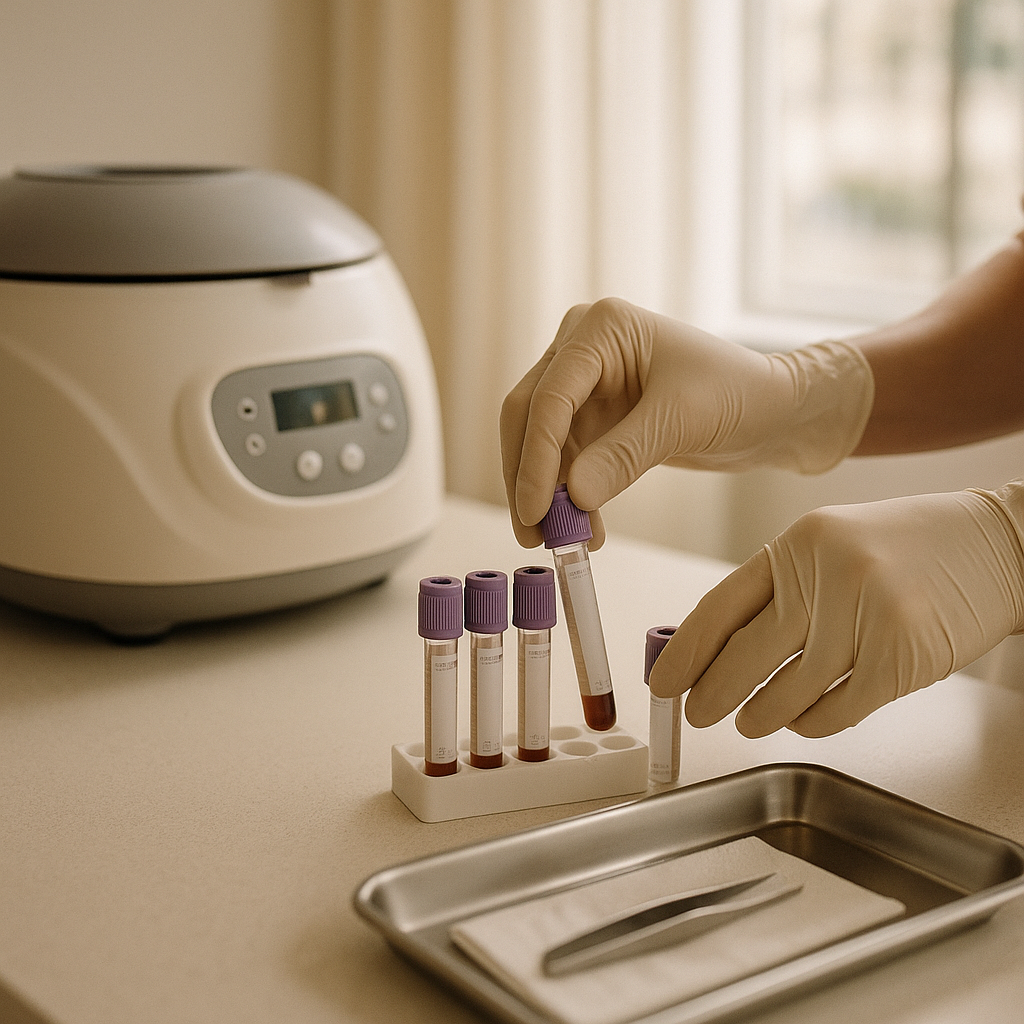
To make PRP, a clinician draws blood into a tube, typically containing an anticoagulant, and spins it in a centrifuge. The process separates blood components so the platelet-enriched plasma layer can be collected. Because the anticoagulant helps keep the preparation fluid, PRP can be injected into the scalp or applied during treatments such as microneedling.
In aesthetic practice, PRP is frequently used to support hair-restoration protocols and to complement collagen-induction treatments. Patients commonly ask whether PRP can “regrow hair” or replace a transplant. The realistic answer is that PRP may support thicker-looking hair and reduce shedding for appropriate candidates with early-to-moderate thinning, but it does not create new follicles or guarantee regrowth in areas where follicles are no longer viable.
How platelet-rich fibrin (PRF) works
PRF is generally processed without an anticoagulant and at a different centrifugation protocol. The result includes a fibrin network, platelets, leukocytes, and plasma. Injectable PRF remains workable only for a short period before the fibrin matrix naturally thickens. This matrix is why PRF is often described as having a more gradual release profile than PRP.
In facial aesthetics, PRF is often considered for thin, crepey skin and areas where a provider wants regenerative support without placing a traditional hyaluronic acid gel filler. It can be used in carefully selected patients around the under-eye region, cheeks, and other areas of skin-quality concern. It is not a substitute for structural volume restoration when a patient has significant hollowing, bone resorption, or laxity.
Why processing and technique matter as much as the name
The concentration and composition of PRP or PRF can vary according to the collection system, centrifuge settings, blood-draw technique, patient hydration, and preparation method. That is why a consultation should focus on the provider’s protocol and your indication rather than broad promises about “stem-cell-like” results. At Akari Medspa, treatment planning starts with a clinical assessment of skin thickness, vascular anatomy, hair-loss pattern, medication history, and aesthetic goals.
Which is better for under-eyes, facial rejuvenation, and hair loss?
Neither PRP nor PRF is universally better. The more useful question is: which preparation is more appropriate for the treatment area and objective?
PRF for under-eye skin quality and delicate facial areas
PRF is often favored for carefully selected under-eye and facial-rejuvenation cases because its fibrin matrix may provide gradual biologic support in thin tissue. Patients from Newport Beach, Costa Mesa, Irvine, and Huntington Beach often seek treatment for tired-looking under-eyes, fine creasing, and texture changes rather than dramatic volume. For those concerns, PRF may be part of a conservative plan aimed at improving skin quality over time.
However, the under-eye area is anatomically complex. It contains thin skin, superficial vessels, the tear trough, the orbital retaining ligament, and fat compartments. Puffiness, fluid retention, pigment, volume loss, and laxity can all create a similar “dark circle” appearance but require different solutions. A board-certified medical provider or appropriately licensed, clinically trained injector should determine whether PRF, a filler, energy-based treatment, surgery referral, or no injection is the safest recommendation.
PRP for hair restoration and microneedling
PRP is commonly used for scalp treatments because it is easy to distribute through areas of diffuse thinning or a receding hairline. A typical initial PRP hair program involves three sessions spaced approximately four to six weeks apart, followed by reassessment and maintenance treatments about every four to six months when clinically appropriate. Early changes in shedding may occur over several months; visible density changes, if they occur, are more reasonably evaluated at six to 12 months because hair grows in cycles.
PRP also pairs naturally with controlled collagen-induction therapy. During PRP microneedling treatments in Newport Beach, microchannels are created in the skin and PRP may be applied topically or used according to the provider’s protocol. This combination is often chosen for texture, fine lines, acne scarring, and overall radiance rather than immediate volume.
When a combination plan makes sense
Many patients benefit from a layered plan rather than a single “best” procedure. PRF may address delicate skin quality, PRP may support scalp health or microneedling, and other options may address separate concerns. For example, dynamic forehead lines respond to neuromodulators, while true midface volume loss may require a carefully chosen filler or collagen stimulator. The goal is facial harmony and healthy-looking skin—not treating every concern with the same product.
Who is a good candidate for PRP or PRF in Newport Beach?
Good candidates are generally healthy adults who want gradual, natural-looking support for skin quality or hair concerns and who understand that results vary. The ideal patient has realistic expectations, can follow a series-based treatment plan when recommended, and is willing to allow time for biologic remodeling.
Candidates who may choose PRP
PRP may be a practical option for patients with early hair thinning, increased shedding, mild textural concerns, fine lines, acne-scar support, or dull-looking skin. Active Newport Beach professionals, parents, and beach-community residents often appreciate that scalp PRP and PRP microneedling usually involve limited social downtime. Temporary redness after microneedling typically lasts one to three days, although sensitivity and dryness can persist longer.
Patients exploring PRP for thinning should receive an assessment of the pattern and cause of hair loss. Androgenetic alopecia, telogen effluvium, thyroid disease, iron deficiency, inflammatory scalp conditions, medication effects, and traction can require different strategies. Our PRF and PRP regenerative treatment options can be discussed alongside a broader medical and aesthetic plan.
Candidates who may choose PRF
PRF may suit a patient focused on crepey texture, fine lines, or subtle rejuvenation in delicate facial tissue. It can be appealing to people who prefer an autologous approach because the material comes from their own blood. Still, “natural” does not mean risk-free. Bruising, swelling, tenderness, infection, and unsatisfactory aesthetic outcomes remain possible with any injection procedure.
Who should postpone or avoid treatment?
PRP and PRF may need to be postponed or may not be appropriate for people with active skin or scalp infection, certain bleeding disorders, significant platelet dysfunction, severe anemia, uncontrolled autoimmune or systemic illness, or active cancer treatment. Anticoagulants, antiplatelet medications, supplements, and anti-inflammatory drugs may affect bruising or platelet function; never stop prescribed medication without guidance from the prescribing clinician.
Pregnant or breastfeeding patients should obtain individualized medical guidance, as elective aesthetic treatment is commonly deferred. A professional consultation is essential for any medical decision, especially for patients with a history of keloid scarring, recurrent cold sores, allergies, or prior facial procedures.
What should you expect during PRP or PRF treatment?
The appointment is straightforward, but careful preparation and injection technique matter. Most sessions take about 45 to 75 minutes depending on whether the treatment involves the face, scalp, microneedling, or multiple areas.
Step 1: Consultation and treatment mapping
Your provider reviews health history, medications, prior procedures, skin or scalp goals, and contraindications. For facial treatments, the provider evaluates tissue quality, asymmetry, volume distribution, and facial movement. For hair restoration, they assess thinning pattern, scalp condition, and whether referral for medical hair-loss evaluation is appropriate.
Step 2: Blood draw and product preparation
A small amount of blood is drawn, usually from the arm, in a process similar to routine laboratory testing. The blood is processed in a centrifuge to separate the appropriate PRP or PRF fraction. PRF must be used promptly because it naturally begins forming a fibrin matrix.
Step 3: Skin cleansing, comfort measures, and delivery
The treatment area is cleansed. Depending on the procedure, a topical numbing cream, ice, or other comfort measures may be used. PRP may be injected into the scalp or applied with microneedling. PRF can be placed with injections or cannula technique in appropriate facial areas. For injections near vascular structures, safety-focused assessment and technique are critical; ultrasound-guided injections in Newport Beach may help a qualified provider identify relevant blood vessels in selected filler and injectable cases.
Step 4: Immediate aftercare
Expect mild redness, pinpoint bleeding, swelling, tenderness, or bruising. Scalp patients may have temporary soreness for 24 to 48 hours. Facial injection bruising can last roughly five to 14 days, particularly around the eyes. Your provider will give individualized instructions, but patients are commonly advised to keep the area clean, avoid strenuous exercise and excessive heat for the remainder of the day, and avoid makeup for approximately 24 hours after microneedling unless instructed otherwise.
Step 5: Follow-up and realistic timeline
PRP and PRF work gradually. Skin may look temporarily plumper after treatment because of swelling, but meaningful skin-quality changes are usually assessed over six to 12 weeks and may continue to evolve with a series. Hair outcomes require greater patience: evaluate trends with standardized photographs over at least six months. Results are individual and no provider can ethically promise a specific degree of collagen production, hair density, or duration.
How long do PRP and PRF results last?
PRP and PRF do not behave like a conventional filler with a fixed “duration.” They are intended to support biologic processes, so outcomes depend on the area treated, treatment series, age, skin quality, hair-loss diagnosis, sun exposure, smoking, hormones, nutrition, and maintenance plan.
Facial PRP and PRF longevity
For facial skin quality, many providers recommend an initial series of two to three treatments, usually spaced four to six weeks apart. Improvements in hydration, texture, fine lines, and overall brightness may become noticeable over one to three months. Maintenance is often considered every six to 12 months, but the right interval depends on the patient’s response and goals.
PRF is not designed to create the same immediate, predictable volumization as hyaluronic acid filler. If your goal is lifting cheeks, replacing significant volume, or reshaping the jawline, PRF alone may be insufficient. In those cases, a provider may discuss Sculptra collagen-stimulator treatment or other options after assessing suitability.
Hair PRP longevity
PRP for hair is generally a maintenance-based treatment. An initial three-session protocol is common, followed by periodic sessions every four to six months if the patient is responding. Stopping maintenance does not make hair worse than its natural course, but the supportive benefit may fade while the underlying cause of hair thinning continues.
What does PRP vs PRF cost in Newport Beach?
Pricing is a major part of choosing between PRP and PRF. In the Newport Beach market, fees reflect the treatment area, blood-processing system, provider credentials, injection complexity, whether microneedling is included, and whether treatment is purchased as a series. A low advertised price is not a complete measure of value if it excludes consultation, numbing, follow-up, or clinically appropriate product preparation.
Typical local investment ranges
The following are realistic approximate ranges for Newport Beach and nearby Orange County communities. Exact pricing should be confirmed in a consultation because protocols vary:
- PRP microneedling for the face: approximately $650 to $1,200 per session.
- PRP hair restoration: approximately $700 to $1,500 per session, or roughly $2,000 to $4,000 for an initial three-session package.
- PRF facial injections: approximately $750 to $1,500 per session, depending on the number of areas and injection complexity.
- PRF under-eye treatment: often approximately $900 to $1,800 per session, with two to three sessions sometimes recommended.
These are elective aesthetic services and are typically not covered by health insurance. Cost should be weighed against provider experience, sterile technique, candidacy screening, and a plan that does not oversell what an autologous treatment can accomplish. Akari Medspa provides individualized recommendations and transparent investment guidance after evaluating your goals.
How to compare treatment quotes intelligently
Ask whether the quote is per session or for a series; whether it includes PRP or PRF specifically; how many tubes are processed; who performs the procedure; and what follow-up is included. For hair treatment, ask how progress will be documented. For facial injections, ask what the plan is if swelling reveals that the concern is actually pigment, laxity, or structural volume loss rather than skin quality alone.
PRP vs PRF vs fillers: which treatment gives the most visible change?
PRP, PRF, and dermal fillers can all be valuable, but they solve different problems. Comparing them accurately helps prevent disappointment and unnecessary treatment.
PRP and PRF versus hyaluronic acid fillers
PRP and PRF are regenerative adjuncts intended to support skin and scalp quality gradually. Hyaluronic acid fillers, such as products in the Juvéderm family, are gel products that can provide more immediate, measurable volume correction in properly selected areas. Fillers are often better suited for contour deficits, deeper folds, or structural support; PRF may be considered where the priority is thin-skin quality and subtle improvement.
Filler procedures carry distinct risks, including rare but serious vascular occlusion. This is one reason patients should choose an experienced medical injector, disclose prior treatments, and seek urgent medical attention for severe pain, blanching, mottled discoloration, or visual symptoms after any facial injection.
PRP and PRF versus neuromodulators
Botox Cosmetic, Dysport, and Daxxify are prescription neuromodulators used to temporarily reduce muscle activity that creates dynamic lines. They do not restore hair, replace volume, or directly improve skin texture in the way collagen-induction protocols aim to do. A Newport Beach patient may reasonably use a neuromodulator for frown lines and PRP microneedling for texture, but the treatments are not interchangeable.
PRP and PRF versus energy-based skin tightening
Energy-based treatments, such as ultrasound skin tightening, target tissue differently and may be more relevant for mild laxity. Regenerative treatments may complement, rather than replace, a broader plan. The best plan is conservative, staged, and based on the cause of the concern—not on the newest social-media trend.
How do you choose a PRP or PRF provider in Newport Beach?
A high-quality regenerative treatment begins with medical judgment. Look for a practice that takes a medical history, explains realistic benefits and limitations, identifies the exact product being used, and has a clear plan for adverse events. Be cautious with clinics that imply PRP or PRF is identical to stem-cell therapy, promise permanent outcomes, or recommend injections without examining the treatment area.
Questions to ask at your consultation
Ask who will perform the procedure and what their license, training, and supervision structure are. Ask whether the practice uses an FDA-cleared centrifuge or blood-processing device for its intended laboratory function. Importantly, FDA clearance of a device is not the same as FDA approval of PRP or PRF for every cosmetic indication. In the United States, many aesthetic uses of autologous PRP and PRF are performed off-label, meaning they should be discussed with informed consent.
Also ask how your provider will distinguish scalp conditions, under-eye puffiness, pigmentation, volume loss, and skin laxity. Patients traveling from Pasadena, San Marino, San Gabriel, Glendale, Arcadia, and South Pasadena deserve the same careful diagnostic approach as patients local to Newport Beach. Book a consultation with Akari Medspa to compare PRP and PRF based on your actual goals, receive a personalized cost estimate, and decide on a regenerative plan that prioritizes safety and natural-looking results.
Frequently Asked Questions About PRP vs PRF in Newport Beach
Is PRF better than PRP for under-eyes?
PRF may be preferred for some under-eye patients because its fibrin matrix can provide gradual regenerative support in thin, delicate tissue. It is not automatically better for every dark circle or hollow. Under-eye darkness may be caused by pigment, visible vessels, puffiness, fat prolapse, volume loss, or laxity. A qualified provider should diagnose the cause before recommending PRF, PRP, filler, laser treatment, or a surgical referral.
Is PRP better than PRF for hair loss?
PRP is more commonly used in hair-restoration protocols because it is a fluid platelet-rich preparation that can be distributed throughout thinning scalp areas. A typical plan includes three sessions four to six weeks apart, then maintenance every four to six months if appropriate. PRF can be used in some practices, but neither treatment is guaranteed to reverse hair loss. A proper diagnosis is important because iron deficiency, thyroid conditions, hormonal changes, inflammatory disease, and androgenetic alopecia require different care.
How many PRP or PRF sessions will I need?
For facial rejuvenation, many patients start with two or three sessions spaced about four to six weeks apart. For hair restoration, three initial PRP sessions spaced four to six weeks apart are common. Your provider may recommend maintenance every six to 12 months for facial skin quality or every four to six months for hair, depending on your response and goals. Individual protocols vary.
Does PRP or PRF hurt?
Most patients describe mild-to-moderate discomfort rather than severe pain. A blood draw feels similar to routine laboratory testing. Topical numbing cream, ice, vibration, or other comfort measures may be used for facial injections, scalp injections, and microneedling. The scalp can be sensitive, and facial bruising or tenderness may occur for several days. Your provider can explain comfort options before treatment.
Is PRP or PRF FDA approved for cosmetic injections?
PRP and PRF are autologous preparations made from a patient’s own blood. Centrifuges and blood-processing systems may be FDA-cleared for specific device functions, but that does not mean PRP or PRF is FDA-approved for every aesthetic use, including cosmetic facial injections or hair restoration. Many aesthetic applications are performed off-label. Ask your provider about the device, protocol, evidence, risks, and informed-consent process.
What is the average PRP and PRF cost in Newport Beach?
In Newport Beach, PRP microneedling commonly costs about $650 to $1,200 per session; PRP hair restoration often costs $700 to $1,500 per session; and PRF facial injections commonly range from $750 to $1,500 per session. PRF under-eye treatment may range from approximately $900 to $1,800 per session. Costs vary by provider, treatment area, product preparation, and whether a series is purchased.
What should I avoid after PRP or PRF?
Follow your treating provider’s instructions. In general, patients are often asked to avoid strenuous exercise, saunas, hot yoga, alcohol, and excessive sun or heat for the rest of the treatment day. After microneedling, avoid makeup and potentially irritating skincare ingredients for about 24 hours unless your provider advises otherwise. Do not stop prescription blood thinners, anti-inflammatory medication, or other medications without direction from the clinician who prescribed them.

Isabel “Izzy” Koo, MSN, NP-BC, leads Akari Medspa with a focus on integrity, artistry, and precision. As a board-certified nurse practitioner with advanced training in aesthetic medicine, she focuses on subtle enhancements that bring out each client’s natural features. Her careful approach and strong sense of balance help turn every treatment into a thoughtful, personalized experience built on trust.