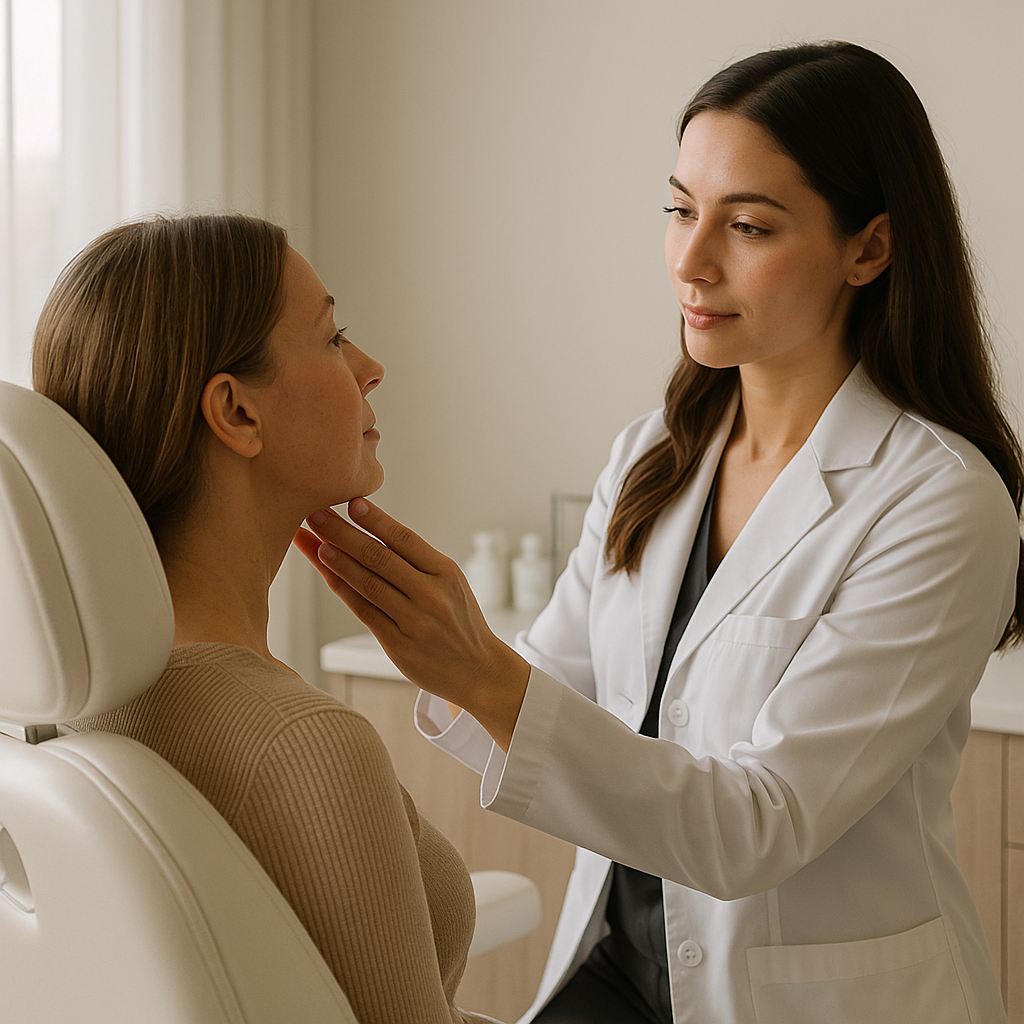

Dermal Fillers in Pasadena: Facial Balancing and Natural-Looking Volume Restoration
Dermal fillers in Pasadena can restore age-related volume, refine facial proportions, and soften selected lines without changing the character of your face. At Akari Medspa, treatment planning centers on facial balancing: evaluating the cheeks, temples, chin, jawline, lips, and under-eye area as connected structures rather than treating one feature in isolation. The goal is a refreshed, structurally supported, natural-looking result tailored to your anatomy.
Quick Answer: Dermal fillers in Pasadena are injectable gels, most often hyaluronic acid, used to replace lost volume and improve facial balance in areas such as the cheeks, lips, chin, jawline, and folds around the mouth. Results are visible immediately for most hyaluronic acid fillers and commonly last 6–18 months, depending on the product, area, metabolism, and amount placed.
What are dermal fillers, and how do they create natural-looking facial balance?
Hyaluronic acid fillers replace support and hydration
Most contemporary facial fillers are made with hyaluronic acid (HA), a sugar molecule naturally found in skin and connective tissue that binds water. Products in the Juvéderm and Restylane families use cross-linked HA gels with different thicknesses and lifting characteristics. A softer gel may be selected for lip shape or fine lines, while a firmer, more cohesive gel may be appropriate for cheek contour, chin projection, or jawline definition.
When placed at the appropriate tissue depth, filler can provide immediate volume and structural support. It does not permanently “lift” loose skin; rather, it replaces volume or improves contour where anatomy supports that choice. This distinction matters for patients in Pasadena who want an elegant, rested appearance rather than a noticeably overfilled look.
Facial balancing is a whole-face assessment
Facial balancing considers proportion, symmetry, profile, skeletal structure, skin quality, and movement. For example, a patient concerned about nasolabial folds may benefit more from conservative midface support than from repeatedly filling the fold itself. A recessed chin can make the nose appear more prominent in profile; measured chin enhancement may improve profile harmony without any nasal procedure.
At Akari Medspa, a consultation should include photographs, medical history, prior filler history, and a discussion of what “natural” means to you. Many patients from Pasadena, South Pasadena, San Marino, San Gabriel, Arcadia, and Glendale prefer a gradual plan that can be reassessed rather than a one-visit transformation.
Which filler brands may be used?
FDA-approved HA filler families include Juvéderm and Restylane products for specific approved facial indications. Exact indications vary by product, patient age, and facial area. Calcium hydroxylapatite filler (Radiesse) and poly-L-lactic acid biostimulator (Sculptra Aesthetic) are different injectable categories with different mechanisms, risks, and timelines. A qualified injector selects products based on anatomy and indication—not simply on a brand request.
Who is a good candidate for dermal fillers in Pasadena?
Candidates seeking refinement rather than a dramatic change
Good candidates are generally healthy adults with realistic expectations who want to address volume loss, contour imbalance, lip asymmetry, chin projection, cheek flattening, or selected facial lines. Common concerns include looking tired in work meetings, seeing deeper folds in photographs, or feeling that the lower face has lost definition over time. Pasadena’s active, image-aware patient community often values discreet treatments that fit into a busy professional, family, or social schedule.
Fillers may be suitable for adults of many ages. In younger adults, treatment may be focused on proportion and contour. In mature patients, the priority is more often restoring support lost through changes in bone, fat compartments, collagen, elastin, and skin thickness.
When filler should be postponed or avoided
An in-person medical consultation is essential. Treatment is typically postponed with an active skin infection, cold sore outbreak near the planned injection site, significant inflammation, or certain dental procedures scheduled close to treatment. Patients who are pregnant or breastfeeding are commonly advised to defer elective cosmetic injectables because safety data are limited. Tell your clinician about allergies, autoimmune conditions, bleeding disorders, medications and supplements, previous filler, and any history of facial surgery.
Filler is not the best answer for every concern. Significant skin laxity may respond more appropriately to collagen-stimulating treatments, energy-based tightening, surgery, or a combined plan. Patients considering a comprehensive approach can discuss facial rejuvenation options during an Akari Medspa consultation.
What areas can dermal fillers treat for facial balancing?
Cheeks, temples, and midface volume
The cheeks and temples are structural areas. Conservative restoration can improve a hollow or fatigued appearance and may soften the visual prominence of lower-face folds. Overfilling the midface can look unnatural, which is why product choice, depth, and incremental dosing matter.
Chin, jawline, and profile harmony
Chin filler can improve projection, vertical chin height, or the transition between chin and jawline in selected patients. Jawline filler can create a cleaner mandibular contour when adequate skin quality and anatomy are present. These treatments are popular among patients traveling from Irvine, Costa Mesa, Huntington Beach, and Newport Beach as well as Pasadena, particularly when the aim is subtle profile balance.
Lips, perioral lines, and smile-area folds
Lip filler can define the vermilion border, improve hydration and shape, restore age-related volume, or correct mild asymmetry. Natural lip enhancement requires restraint: the ideal amount depends on lip tissue, dental support, facial proportions, and the patient’s baseline anatomy. Folds around the mouth often require a broader assessment of cheek support, skin movement, and lower-face volume before direct filling.
Under-eye hollowing requires special caution
Tear-trough filler is technically advanced and is not appropriate for everyone. Swelling, malar edema, thin skin, pigment, fat pads, and prior filler can all affect suitability. An experienced clinician may recommend no filler, dissolve prior HA filler, improve skin quality, or refer for a surgical opinion when that is safer or more likely to meet the patient’s goal.
How does ultrasound-guided dermal filler improve assessment and safety?
Ultrasound can help identify anatomy and existing filler
Ultrasound-guided dermal fillers use high-frequency imaging to visualize soft tissue planes, blood vessels, and, in many cases, previously placed filler. In a region with a high volume of patients who have had injections elsewhere, this can be valuable when someone is unsure which product was used or where it remains. Ultrasound may help an experienced provider assess whether an area contains residual HA filler before adding product or planning hyaluronidase dissolution.
It is an adjunct, not a guarantee
Facial vascular anatomy varies among individuals, and no method eliminates the risk of complications. Ultrasound-guided technique may be clinically appropriate in selected areas and cases, but it does not replace detailed anatomical knowledge, conservative injection technique, informed consent, emergency preparedness, or post-treatment follow-up. Ask the treating clinician whether ultrasound is available and why it is—or is not—recommended for your specific treatment area.
The most serious filler complication is inadvertent injection into a blood vessel, which can compromise blood supply and, rarely, affect vision. Warning signs such as severe or escalating pain, blanching or mottled discoloration, cool skin, or vision changes require immediate medical assessment. HA fillers have the important advantage of being potentially reversible with prescription hyaluronidase when clinically indicated.
What should you expect during a dermal filler appointment at Akari Medspa?
Step 1: Consultation and facial mapping

Your appointment begins with goals, health history, medications, allergies, prior cosmetic procedures, and assessment of facial proportions at rest and in motion. The clinician discusses suitable options, expected product quantity, limitations, risks, and a staged plan when appropriate. Standardized photographs may be used for planning and comparison.
Step 2: Preparation and comfort
Makeup is removed from the treatment area and the skin is cleansed. Many HA fillers contain lidocaine, and topical numbing cream, ice, or other comfort measures may be used. Avoiding alcohol for 24 hours beforehand and avoiding nonessential blood-thinning supplements only if your prescribing clinician approves can help limit bruising; never stop prescribed medication without medical advice.
Step 3: Precise injection
The injector places filler using a needle, a blunt-tip cannula, or both, depending on the area and technique. Treatment commonly takes 30–60 minutes after consultation. Patients may feel pressure, brief pinching, or a mild stinging sensation. The provider may gently assess or mold the area, but aggressive massage at home should only be done if specifically instructed.
Step 4: Recovery and follow-up
Most patients return to normal, non-strenuous activities the same day. Mild tenderness, redness, swelling, firmness, and bruising are common and generally improve over several days; lips can swell more noticeably for 24–72 hours. Avoid strenuous exercise, excessive heat, alcohol, and facial massage for the period your injector recommends, often 24 hours. Plan injectable appointments at least two weeks before a wedding, major event, or professional photos.
How long do dermal fillers last, and when will you see results?
Typical longevity by area and product
HA filler results are visible immediately, although swelling can temporarily obscure the final contour. A more settled result is often assessed around two weeks. Longevity varies considerably, but practical ranges are:
- Lips and mobile mouth areas: approximately 6–12 months.
- Cheeks and midface: approximately 12–18 months, sometimes longer depending on product and placement.
- Chin and jawline: approximately 12–18 months for many HA products.
- Under-eye area: variable; longevity may be extended, but this area requires especially selective treatment.
Metabolism, facial movement, smoking, sun exposure, product formulation, injection depth, and treatment volume all influence duration. Maintenance is individualized; adding filler simply because a calendar interval has passed can lead to overcorrection. At Akari Medspa, reassessment is more useful than a one-size-fits-all refill schedule.
Filler versus Sculptra: which is right for you?
HA filler gives immediate, shape-specific correction and can be dissolved if necessary. Sculptra Aesthetic is poly-L-lactic acid, a collagen-stimulating injectable used in a series of sessions for diffuse facial volume loss. Sculptra results develop gradually over weeks to months and may last about two years or more in appropriately selected patients, while it is not a reversible HA gel. Some patients benefit from both: structural HA filler in a precise feature and collagen stimulation for broader volume loss.
What do dermal fillers cost in Pasadena and Newport Beach?
Realistic local investment ranges
Dermal filler pricing is usually quoted per syringe, although complete facial balancing plans may involve more than one syringe. In the Pasadena and Newport Beach market, a realistic range for FDA-approved HA filler is commonly $700–$1,100 per syringe, depending on the brand, formulation, treatment area, and injector expertise. Specialty products and advanced treatment plans may cost more.
Typical planning ranges, not guarantees of the amount you will need, include:
- Lip filler: often 0.5–1 syringe, approximately $450–$1,100.
- Cheek or midface enhancement: often 1–2 syringes total, approximately $700–$2,200.
- Chin enhancement: often 1–2 syringes, approximately $700–$2,200.
- Jawline contouring: often 2–4 syringes in suitable candidates, approximately $1,400–$4,400.
- Full facial balancing: commonly $2,000–$5,000+, staged according to anatomy and goals.
The lowest price is not necessarily the best value in a medical procedure. Product authenticity, sterile technique, clinical judgment, complication protocols, and appropriate follow-up matter. Your written quote should identify the product, number of syringes, and what follow-up is included. For current availability and a tailored plan, contact Akari Medspa.
How can you choose a safe, skilled filler provider in Pasadena?
Ask clinically meaningful questions
Choose a licensed medical practice and ask who will inject you, what professional license and injectable training they hold, how often they treat your chosen area, and how they manage complications. Board-certified physicians and appropriately trained nurse practitioners, physician assistants, registered nurses, and other licensed clinicians may provide injectables within their legal scope and practice protocols. Verify credentials independently and prioritize experience in facial anatomy over social-media trends.
Ask whether the practice uses authentic, FDA-approved products for their approved indications; whether hyaluronidase and an emergency protocol are available for HA filler complications; and whether the clinician can identify when filler is not appropriate. Be cautious of pressure to purchase excessive volume, treatment without a consultation, or unusually low pricing that does not disclose product and syringe quantity.
Make decisions with long-term facial health in mind
A premium filler plan is conservative, documented, and designed to evolve. Bring information about prior injections, especially if you were treated in the lips, cheeks, under-eyes, nose, or jawline. Patients seeking adjacent aesthetic services can also explore the practice’s medical spa services to discuss a coordinated skin-quality and facial-rejuvenation plan.
Dermal fillers can be an effective, minimally invasive way to restore volume and create facial harmony when they are selected and placed thoughtfully. If you are considering dermal fillers in Pasadena, schedule a personalized consultation with Akari Medspa to review your anatomy, goals, treatment options, investment, and safety considerations before proceeding.
Frequently asked questions about dermal fillers in Pasadena
Are dermal fillers safe?
Dermal fillers are generally safe when FDA-approved products are used by a qualified, licensed clinician in an appropriate patient, but they are medical procedures with real risks. Common effects include temporary swelling, bruising, tenderness, and asymmetry. Rare but serious vascular complications require immediate recognition and treatment. A consultation should cover your health history, prior filler, and the practice’s complication protocol.
How much filler do I need for a natural result?
There is no universal number. Lips may need 0.5–1 syringe, while cheeks, chin, or jawline may require one or more syringes depending on baseline volume and goals. Natural results usually come from conservative placement in the right areas, often completed in stages rather than using a predetermined amount.
Can dermal filler be dissolved?
Most hyaluronic acid fillers, including many Juvéderm and Restylane products, can be broken down with prescription hyaluronidase when clinically indicated. Dissolution should be performed only after an in-person assessment by an experienced medical professional. Sculptra and non-HA fillers are not dissolved with hyaluronidase.
Does dermal filler hurt?
Most patients describe brief pinching, pressure, or stinging rather than severe pain. Topical anesthetic, ice, careful technique, and fillers containing lidocaine can improve comfort. Sensitivity varies by area; lips are commonly more sensitive than cheeks.
How long is recovery after filler?
Most people resume routine activities the same day. Redness and mild swelling often improve within 24–72 hours, while bruising can last up to one to two weeks. Plan treatment at least two weeks before an important event, particularly for lip or under-eye treatment.
Can I get Botox and dermal filler at the same appointment?
Often, yes. Botulinum toxin products such as Botox Cosmetic reduce muscle movement, while fillers restore volume or contour. They address different mechanisms of facial aging and can be planned together when medically appropriate. Your clinician should determine sequencing and dosage after examining you.
What is the difference between dermal filler and a non-surgical facelift?
“Non-surgical facelift” is a marketing term rather than one standardized procedure. It may describe a personalized combination of filler, neuromodulator, collagen stimulation, skin resurfacing, or energy-based tightening. Filler can improve volume and contour, but it cannot duplicate the degree of skin lifting or tissue repositioning achieved by surgical facelift procedures.

Isabel “Izzy” Koo, MSN, NP-BC, leads Akari Medspa with a focus on integrity, artistry, and precision. As a board-certified nurse practitioner with advanced training in aesthetic medicine, she focuses on subtle enhancements that bring out each client’s natural features. Her careful approach and strong sense of balance help turn every treatment into a thoughtful, personalized experience built on trust.