Quick Answer
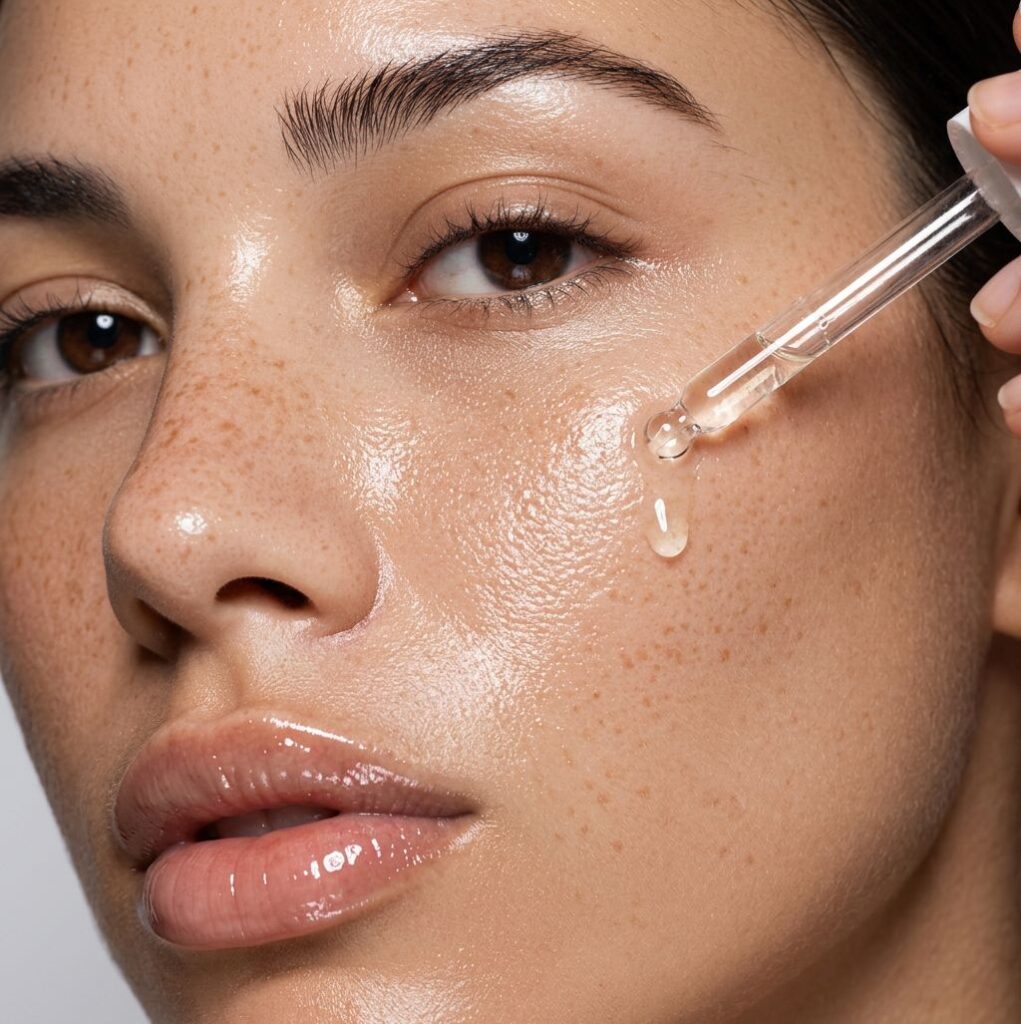
Glass skin is a Korean beauty term for skin that looks so smooth, deeply hydrated, and even-toned that it appears almost translucent, like glass. It is a look, not a single product: it comes from improving skin quality itself, especially hydration, texture, and barrier health. At Akari Medspa, the treatment behind the look is the Rejuran Glass Skin Booster, an injectable treatment using polynucleotides derived from purified salmon DNA to support skin repair and deep hydration from within.
Quick Facts
- What it is: a skin-quality goal (smooth, hydrated, luminous, even-toned skin)
- Where the term comes from: Korean beauty (K-beauty)
- The treatment at Akari: Rejuran Glass Skin Booster (polynucleotide injections)
- Key ingredient: polynucleotides (PN) from purified salmon DNA
- Typical plan: a series of 3 to 4 sessions, spaced about a month apart
- Downtime: minimal; small bumps at injection points usually settle within a day or two
- Best for: dullness, dehydration, fine lines, rough texture, weakened skin barrier
What “glass skin” actually means
The phrase comes from Korean beauty culture, where the ideal is not heavy coverage but skin that barely needs any. Glass skin looks clear, poreless-looking, and lit from within, with a smooth surface that reflects light evenly. It is the opposite of a matte, powdered finish: think dewy, plump, and calm. Achieving it is less about one miracle product and more about the condition of the skin itself, which is why treatments that improve skin quality, rather than covering it, are the real route there.
Why skin reads as “glassy”
Three things make skin reflect light like glass. First, hydration: well-hydrated skin looks plump and translucent, while dehydrated skin looks flat and crepey. Second, texture: a smooth surface reflects light in one direction, while roughness and enlarged pores scatter it. Third, barrier health: when the skin barrier is intact, skin stays even-toned and calm instead of red or patchy. Most at-home routines can help the surface temporarily. The treatments below work deeper, on the skin’s own repair processes, which is where lasting change comes from.
How the Rejuran Glass Skin Booster works
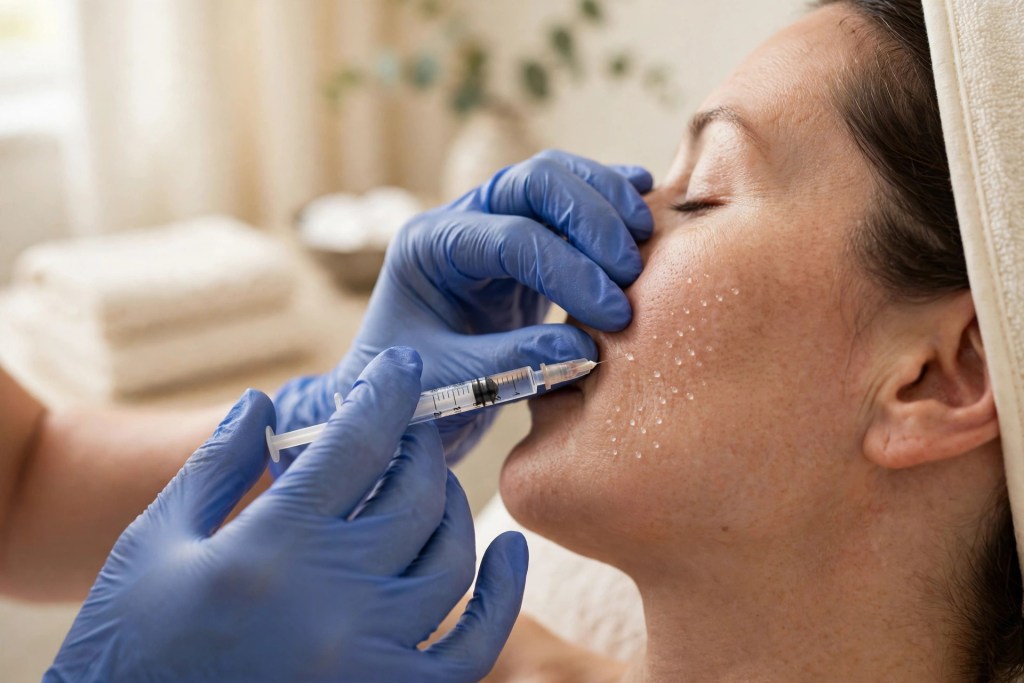
Rejuran is built around polynucleotides, refined DNA fragments derived from purified salmon DNA that are highly compatible with human skin. Injected in a fine pattern across the treatment area, polynucleotides support the skin’s repair environment and help it hold hydration more effectively over time. Rather than adding volume like a filler, a skin booster improves the quality of the skin itself: elasticity, smoothness, and that even, light-reflecting finish associated with glass skin. At Akari Medspa, injections are ultrasound-guided for precision, and treatment begins with a consultation and skin assessment so the plan matches your skin, not a template. Our guide to what Rejuran is and how it works covers the science in more depth, and the Rejuran Glass Skin Booster service page covers treatment details.

Who glass skin treatment is for
It suits people whose skin looks dull or tired even with a good routine, skin that feels dehydrated no matter how much moisturizer goes on, early fine lines and rough texture, and skin whose barrier has been weakened by sun, travel, or over-exfoliation. It is also a good fit if you want your makeup to sit better because the skin underneath is smoother. It is not a treatment for deep wrinkles or volume loss; those are addressed by other treatments, and your consultation is where we sort out which combination makes sense for you.
How long it lasts, and maintenance
A series of 3 to 4 sessions, spaced about a month apart, is the typical starting plan, with results building gradually as the skin repairs. Most patients then maintain with a session every 6 to 12 months, adjusted to how their skin responds. Day to day, the habits that protect the result are simple: gentle cleansing, consistent moisturizing, daily sunscreen, and not over-exfoliating. Glass skin is a condition you maintain, not a finish you apply once.
Frequently Asked Questions
Is glass skin a facial or an injection treatment?
The term describes a look, and different clinics chase it different ways. At Akari Medspa, glass skin is achieved with the Rejuran Glass Skin Booster, an injectable polynucleotide treatment that improves hydration, texture, and skin quality from within, rather than a surface facial.
How many sessions do I need for glass skin?
A series of 3 to 4 sessions, spaced about a month apart, is typical. Results build gradually as the skin repairs, and most patients maintain with a session every 6 to 12 months.
Does the glass skin booster hurt, and is there downtime?
The injections are fine and quick, and most patients find them very manageable. Small bumps at the injection points are common and usually settle within a day or two, so downtime is minimal.
How is a skin booster different from filler?
Filler adds volume and shape. A skin booster like Rejuran does not change your facial structure; it improves the quality of the skin itself, including hydration, elasticity, and smoothness, which is what creates the glass skin finish.
Can I get glass skin with skincare alone?
Skincare helps the surface and is essential for maintenance, especially hydration and daily sunscreen. But products sit on top of the skin, while a polynucleotide booster works within it, which is why the treatment route produces a deeper, longer-lasting change in skin quality.
If your skin has been looking dull or dehydrated and you want the glass skin look without a filter, start with a consultation at Akari Medspa. Treatment is planned and performed by Isabel “Izzy” Koo, MSN, NP-BC, an Allergan Master Injector, at our Pasadena clinic and our Newport Beach location. Book a consultation: https://akarimedspa.janeapp.com/
Medically reviewed by Isabel “Izzy” Koo, MSN, NP-BC, Allergan Master Injector, Akari Medspa.

Isabel “Izzy” Koo, MSN, NP-BC, leads Akari Medspa with a focus on integrity, artistry, and precision. As a board-certified nurse practitioner with advanced training in aesthetic medicine, she focuses on subtle enhancements that bring out each client’s natural features. Her careful approach and strong sense of balance help turn every treatment into a thoughtful, personalized experience built on trust.