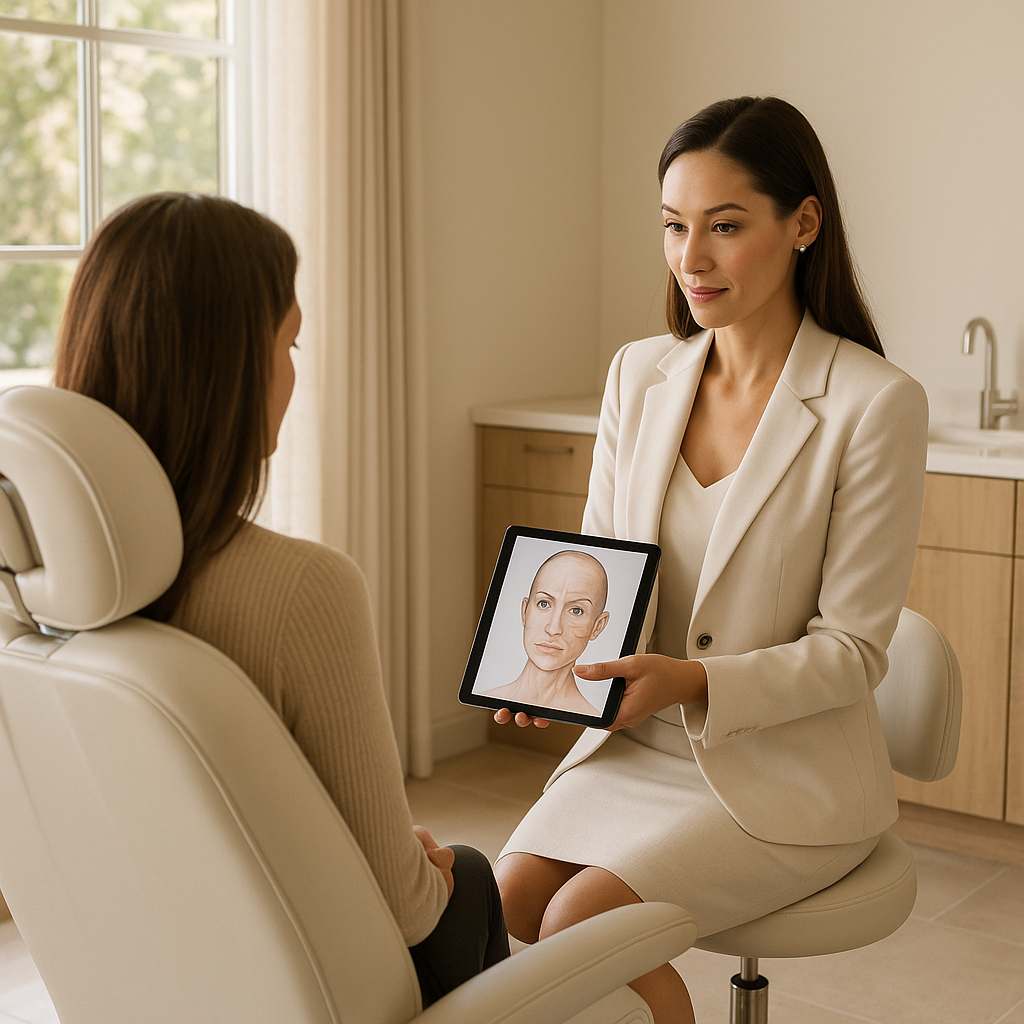

Microneedling Cost in Pasadena, CA: Treatment Pricing and Results Timeline
Microneedling is a highly customizable collagen-induction treatment, so the right investment depends on your skin goals, treatment area, and whether regenerative add-ons are recommended. For Pasadena patients seeking smoother texture, softer acne scars, smaller-looking pores, and a more radiant complexion, understanding microneedling cost, recovery, and realistic results timing makes choosing a provider easier. Akari Medspa creates clinically informed plans designed around natural, progressive improvement—not one-size-fits-all packages.
Quick Answer: Microneedling cost in Pasadena typically ranges from $300 to $700 per session for the face, while microneedling with PRP or PRF commonly ranges from $550 to $1,000+ per session. Most patients need a series of three to six treatments, spaced four to six weeks apart. Initial glow may appear within days, but collagen-based improvement develops over 8 to 12 weeks.
What Does Microneedling Cost in Pasadena, CA?
Typical Pasadena microneedling price ranges
A standard facial microneedling session in the Pasadena market generally costs $300 to $700. This range reflects meaningful differences in the device used, provider training, the degree of customization, topical products, numbing, and whether the appointment includes areas beyond the face. A lower advertised price is not necessarily comparable to a medical-grade treatment performed with a sterile, single-use needle cartridge and an individualized depth protocol.
For patients who want to combine controlled microchannels with autologous growth-factor support, microneedling with PRP or PRF generally costs $550 to $1,000 or more per session in Pasadena. PRP is platelet-rich plasma, prepared from a small blood sample. PRF, or platelet-rich fibrin, is a fibrin-rich preparation that may provide a slower release of platelets and signaling proteins. Neither should be presented as a guaranteed cure for scars, hair loss, or aging; suitability depends on the concern, skin health, and treatment plan. Learn more about microneedling with PRP for skin repair when considering a regenerative add-on.
Common local investment ranges include:
- Face only: approximately $300–$700 per treatment
- Face and neck: approximately $450–$850 per treatment
- Face, neck, and décolletage: approximately $600–$1,000 per treatment
- Microneedling with PRP or PRF: approximately $550–$1,000+ per treatment
- Acne-scar or larger body-area treatment: approximately $500–$1,200+ depending on area and time required
- Series of three treatments: often $900–$1,800 for standard facial microneedling, with pricing varying by inclusions and package structure
These are planning ranges, not a quote. At Akari Medspa, a consultation determines whether a standard series, a regenerative protocol, a peel, skin booster, or another collagen-focused treatment better fits the patient’s goals and budget.
Why prices vary between Pasadena medspas
Microneedling pricing should account for more than the appointment length. It can vary based on the treatment area, the number and depth of passes, scar-focused technique, use of PRP/PRF, skin preparation, post-treatment products, and clinician expertise. Pasadena patients often compare treatment menus across Pasadena, San Marino, San Gabriel, Arcadia, South Pasadena, and Glendale; the most useful comparison is the total value of a medically appropriate treatment plan rather than a single promotional price.
Ask whether the stated price includes topical anesthetic, the device cartridge, post-procedure care, follow-up guidance, and a consultation. Also ask who performs the procedure, what training they have, and what device is used. In California, aesthetic medical treatments should be performed in an appropriately supervised clinical setting by qualified, licensed professionals according to applicable laws and practice protocols.
How Does Microneedling Work for Texture, Pores, and Scars?
The collagen-induction process explained
Microneedling, also called collagen induction therapy, uses a device with sterile, very fine needles to create controlled micro-injuries in the skin. These microchannels initiate the wound-healing cascade: inflammation occurs first, followed by proliferative repair and longer-term remodeling. Fibroblasts participate in producing structural proteins, including collagen and elastin, which support the skin’s dermal matrix.
The treatment does not “erase” pores or scars overnight. Rather, as the dermis remodels over time, many patients see smoother surface texture, more even light reflection, and a reduction in the appearance of fine lines or certain depressed acne scars. Needle depth and technique must be selected carefully by area; thinner skin around the eyes requires a different approach than the cheeks, forehead, or a scarred area of the jawline.
Microneedling can be useful for:
- Fine lines and early textural aging
- Enlarged-looking pores
- Mild to moderate uneven texture
- Selected atrophic acne scars, such as rolling scars
- Mild photodamage and dullness
- Some stretch marks and body texture concerns
It is not the ideal standalone answer for every concern. Deep ice-pick scars, substantial skin laxity, active inflammatory acne, severe melasma, or significant volume loss may require a different or combined treatment plan. A provider should assess skin type, scar pattern, pigment history, medications, and healing risk before recommending treatment.
Microneedling versus chemical peels and laser resurfacing
Microneedling, chemical peels, and lasers are all used for skin renewal, but they work differently. Microneedling creates mechanical microchannels and stimulates dermal remodeling. Chemical peels use acids to create a controlled chemical exfoliation at different skin depths. Laser resurfacing uses light energy to target water or pigment and can be ablative or non-ablative.
For many Pasadena patients with busy work, social, and family schedules, microneedling is appealing because downtime is often shorter than with more aggressive ablative resurfacing. However, a shorter recovery does not automatically mean it is better. Laser treatments can be more appropriate for certain wrinkles, photodamage, vascular concerns, or scar patterns. Chemical peels may be a strong choice for superficial dullness, acne, or hyperpigmentation when selected carefully.
If pigment is a major concern, especially melasma or post-inflammatory hyperpigmentation, the assessment matters. Overly aggressive needling or treating inflamed skin can worsen discoloration. Patients with darker skin tones can absolutely be candidates, but settings, preparation, sun protection, and aftercare should be individualized. For pigment-focused plans, our Cosmelan Peel treatment may be discussed when clinically appropriate.
How Many Microneedling Sessions Will You Need?
Recommended treatment series by concern
Most people do not achieve their best result from one appointment. A typical starting plan is three to six microneedling sessions, performed approximately four to six weeks apart. This interval gives the epidermis time to recover and supports the longer collagen-remodeling process.
A common planning framework is:
- Glow, mild texture, and early fine lines: three sessions
- Visible pores or moderate texture irregularity: three to four sessions
- Atrophic acne scars: four to six sessions, sometimes combined with other scar-directed methods
- Maintenance after an initial series: one treatment every six to 12 months, depending on goals and skin response
The exact number should never be promised in advance. Scar depth, acne activity, hormonal changes, sun exposure, skin-care habits, smoking, and individual collagen response all affect progress. Patients in Pasadena and nearby San Marino, Arcadia, and South Pasadena often ask whether PRP or PRF means fewer sessions. It may be a reasonable add-on for selected candidates, but it does not guarantee a specific outcome or replace a properly timed series.
When will you see results?
Immediately after microneedling, the skin commonly looks pink to red and may appear temporarily plumper due to mild swelling and hydration. Some patients notice a brighter “fresh skin” look after several days. That short-term glow is not the same as collagen remodeling.
New collagen formation and matrix remodeling take time. Many patients begin noticing more meaningful textural changes four to six weeks after a session, with continued refinement around eight to 12 weeks. With a series, results typically build gradually over several months. Before-and-after photographs should be taken in consistent lighting and positioning because changes in texture and pores can be subtle yet clinically meaningful.
What Should You Expect During a Microneedling Appointment?
Step 1: Consultation and skin assessment
Your appointment begins with a review of concerns, medical history, current skin care, acne activity, pigment history, medications, allergies, and prior procedures. Tell your provider if you have a history of cold sores, keloid or hypertrophic scarring, bleeding disorders, immune suppression, or recent isotretinoin use. A consultation also helps distinguish whether texture is caused by scarring, dehydration, pigment, laxity, or volume loss.
Step 2: Preparation and numbing
The skin is cleansed thoroughly. A topical anesthetic is commonly applied for approximately 20 to 45 minutes, depending on the protocol and areas treated. The numbing cream is removed before needling, and the skin is prepared using clean, sterile technique.
Step 3: Controlled microneedling treatment
The active needling portion commonly takes 20 to 45 minutes for the face, although total appointment time is often 60 to 90 minutes including consultation, numbing, and aftercare. The provider adjusts depth and technique by anatomical area and indication. It is normal to feel pressure, vibration, or a scratch-like sensation even with numbing.
Step 4: Optional PRP or PRF application
When PRP or PRF is included, a blood draw is performed and the sample is processed according to the practice protocol. The preparation may be applied topically during or after treatment and, in some protocols, used in a provider-directed manner appropriate to the area and indication. PRF and PRP regenerative treatments are personalized rather than necessary for every microneedling patient.
Step 5: Immediate calming care and aftercare plan
After treatment, the skin may be red, warm, tight, or mildly swollen. Your provider may apply a calming, barrier-supporting product and will provide written instructions. Schedule treatment when you can avoid strenuous activity, direct sun, swimming, and important social events for at least the first few days.
What Is Microneedling Downtime and Aftercare Like?
A realistic recovery timeline
Most patients experience redness similar to a moderate sunburn for 24 to 72 hours. Mild swelling, pinpoint bleeding during the procedure, sensitivity, dryness, or roughness can occur. By days two through four, redness generally decreases and light flaking or tightness may be noticeable. Recovery can be longer after deeper scar-focused treatments or when treating the neck, chest, or body.
Plan for one to three days of visible redness and allow up to a week for the skin to feel fully settled. This is why many patients book before a lighter work schedule or weekend rather than immediately before a wedding, photoshoot, business presentation, or beach trip in Huntington Beach or Newport Beach.
What should you avoid after microneedling?
Follow your provider’s instructions, which take priority over generic advice. In general, patients are commonly advised to avoid makeup for about 24 hours, vigorous exercise and heat exposure for 24 to 48 hours, swimming pools and hot tubs for at least 48 hours, and direct sun exposure while skin is sensitive. Use a gentle cleanser, bland moisturizer, and broad-spectrum sunscreen once directed.
Avoid retinoids, exfoliating acids, scrubs, benzoyl peroxide, and potentially irritating active products until the skin barrier has recovered and your provider clears you to resume them—often several days, depending on the protocol. Do not pick or exfoliate flaking skin. Contact your provider promptly for increasing pain, spreading redness, blisters, drainage, fever, or any unexpected reaction.
Who Is a Good Candidate for Microneedling in Pasadena?
Candidates who may benefit
A good candidate is generally an adult with stable, non-infected skin who wants gradual improvement in texture, fine lines, pores, or selected scars and understands that a series may be needed. Microneedling can work across many skin types when thoughtfully customized. It is particularly appealing to patients who want to improve skin quality without surgery or prolonged downtime.
The best consultation is goal-driven. Someone who says “I want smoother skin” may need hydration support; someone concerned about “large pores” may have oiliness, scar texture, or photoaging; and someone seeking a lifted appearance may be better served by a collagen-stimulating injectable or energy-based procedure. For laxity rather than surface texture, Sofwave skin-tightening consultations can help clarify whether ultrasound-based collagen stimulation is a better match.
When should microneedling be postponed or avoided?
Treatment may need to be postponed for active acne breakouts, open wounds, sunburn, active skin infection, an active herpes simplex outbreak, or uncontrolled inflammatory skin disease in the area. Pregnancy, breastfeeding, autoimmune conditions, anticoagulant use, isotretinoin history, a tendency toward abnormal scarring, and certain medications require an individual medical review. Patients with melasma or a history of post-inflammatory hyperpigmentation need conservative planning and diligent sun protection.
Microneedling is a medical-aesthetic procedure, not a substitute for dermatologic diagnosis. Persistent acne, suspicious lesions, rapidly changing pigment, hair loss, or severe scarring should be evaluated by the appropriate medical professional.
Is Microneedling Worth the Cost Compared With Other Skin Treatments?
Value depends on your primary concern
Microneedling can be a high-value option when the goal is gradual collagen support and texture improvement with limited downtime. It is less cost-effective when it is repeatedly used for a concern better addressed with another modality. For example, deep facial folds caused by volume loss may respond more directly to a carefully designed filler or biostimulatory plan, while dynamic forehead lines are typically treated with neuromodulators such as Botox rather than microneedling.
A thoughtful provider may combine treatments over time, but combination care should have a clinical reason—not simply add expense. The best plan matches the biology of the concern: neuromodulators for movement-related wrinkles, fillers for selected structural support, collagen stimulators for gradual volume and quality changes, and microneedling for surface texture and dermal remodeling.
Questions to ask before booking
Before choosing a Pasadena med spa, ask these practical questions:
- What device and sterile needle cartridge will be used?
- Who will perform my treatment, and what are their credentials and relevant training?
- What depth and technique are recommended for my specific concern?
- Is PRP or PRF medically appropriate for me, and what does it add to the price?
- How many sessions are realistically recommended before reassessment?
- What downtime should I expect based on my treatment intensity?
- What is included in the quoted cost, and what are the aftercare instructions?
Akari Medspa welcomes these questions because informed patients make better decisions. A personalized plan can account for Pasadena’s sunny climate, outdoor routines, professional schedules, and the need for careful sun protection during skin recovery.
FAQ: Microneedling Cost and Results in Pasadena
How much is one microneedling session in Pasadena?
One standard facial microneedling session in Pasadena typically costs about $300 to $700. Treatment with PRP or PRF commonly ranges from $550 to $1,000 or more because it includes a blood draw, processing, and regenerative add-on protocol. Your final cost depends on treatment area, device, provider, add-ons, and whether you purchase a series.
How many microneedling sessions do I need for acne scars?
Many patients with atrophic acne scars need four to six sessions spaced four to six weeks apart. Some scar types also benefit from other procedures, such as subcision, chemical reconstruction, laser treatment, or injectable support. A consultation is necessary because deep ice-pick scars and tethered scars do not respond the same way as rolling scars.
How long do microneedling results last?
After an initial series, collagen remodeling can remain visible for months, but skin continues to age and respond to sun exposure, acne, hormones, and lifestyle factors. Many patients schedule maintenance every six to 12 months. There is no permanent guarantee, and daily sunscreen and appropriate skin care help protect results.
Does microneedling hurt?
Topical anesthetic is commonly used, so most patients describe the treatment as tolerable pressure, vibration, or a scratch-like feeling rather than significant pain. Sensation varies by area, needle depth, and individual sensitivity. The forehead and areas over bone may feel more intense than fuller cheek areas.
How long is your face red after microneedling?
Redness commonly lasts 24 to 72 hours, though deeper or scar-focused treatments can produce longer redness, dryness, or mild swelling. Many patients look presentable with a gentle routine after several days, but plan up to one week for complete settling before an important event.
Is microneedling safe for darker skin tones?
Microneedling can be appropriate for many skin tones because it does not rely on pigment-targeting light energy. However, irritation or overly aggressive treatment can still trigger post-inflammatory hyperpigmentation. Patients with melasma, recent tanning, or prior pigment changes need customized settings, careful preparation, and strict sun protection.
Book a Personalized Microneedling Consultation in Pasadena
Microneedling is most rewarding when it is selected for the right concern, performed with appropriate technique, and planned as a realistic series rather than a quick fix. If you are comparing microneedling cost in Pasadena, Akari Medspa can assess your skin, explain the expected investment before treatment, and build a plan around texture, scars, pores, glow, or collagen support. Book a consultation to discuss a medically guided treatment plan and the safest path toward refreshed, natural-looking skin.

Isabel “Izzy” Koo, MSN, NP-BC, leads Akari Medspa with a focus on integrity, artistry, and precision. As a board-certified nurse practitioner with advanced training in aesthetic medicine, she focuses on subtle enhancements that bring out each client’s natural features. Her careful approach and strong sense of balance help turn every treatment into a thoughtful, personalized experience built on trust.